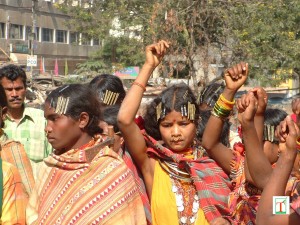
2001 was the International Year of Volunteers. Since then Young India has been organizing the Konark Youth Festival at Konark. The event is supported by the Ministry of Youth Affairs.
Konark Youth Festival
Youth is the essence of India. They need to unite in fighting social evils like factionalism, bigotry, superstition and taboos. The spirit of nationalism, scientific mindset and respect for our cultural heritage and tradition must be inculcated in them. The focus is on showcasing performing arts of India to highlight its tradition and heritage. Off late the festival sees several guest participants from foreign countries too. This year shall see the 10th edition of the festival. It is scheduled from 27th to 31st March 2011 at Konark (Odisha).
Young India received the National Youth Award for the year 2008-09 in recognition of outstanding services to the community. The festival invites national youth awardees, NSS volunteers and youth activists from different corners of the country to initiate interaction among them to bring in social change by involving the youth.
Sometimes we are privileged to hear a Oriya song from foreign delegates – there’s one sung by Isa – from Germany and Kevin , who came from the USA in the 2008 edition.
Konark famous for Konark Temple or Sun Temple built with black granite in the form of Chariot. Konark is the World Heritage Site of the renowned 13th century Sun Temple, also called Black Pagoda, built by king Narasimha Dev I. Since long, the huge Konark Temple Complex–which is an architectural wonder–has enthralled the visitors from far off places.
Konark, Puri and Bhubaneswar form a virtual triangle in tourist circle popularly known as “Golden Triangle”. These three places are well connected by good double lane metal road to each other.
How to reach Puri Konark Bhubaneswar tourist triangle –
Konark to Puri – 35 Kms – One hour
Puri to Bhubaneswar – 60 Kms – Two hours
Bhubaneswar to Konark – 65 Kms – Two hours
Konark to Puri – 35 Kms – One hour
Puri to Bhubaneswar – 60 Kms – Two hours
Bhubaneswar to Konark – 65 Kms – Two hours
Ethnic Village Resort “Toshali Sands” at Puri offer an exclusive budget accommodation package to take you to “10th Konark Youth Festival”. For Reservation and Booking Open for Package at http://bit.ly/gO5TkN . Contact your Travel Desk Consultant “Metu” for more information on “10th Konark Youth Festival” at metu@toshali.in
If you have visit Bikaner’s camel festival and thought it was the ultimate in exotic Indian festivals and fairs, then you should not miss to see the fiesta at Jaisalmer. It is also known as Rajasthan Desert Festival.
Jaisalmer Desert Festival
A three-day long desert extravaganza of music, dances, handicraft fairs and interactive competitions- including an unusual event like ‘Mr Desert’ Pageant, ‘Turban Tying’ contest and ‘Best Moustache’ contest. The Jaisalmer Desert Festival is organised by the Rajasthan Tourism Development Corporation, showcase the performing arts of the region on the stretching sands around this desert citadel.
It’s the showcase of all things Rajasthani culture, cuisines, dresses and it is a justifiably popular Indian festival and fairs with both domestic and foreign tourists coming from across the world to be a part of the Jaisalmer desert festival. Besides the food, the music and the cultural performances, other major eye-catching events are camel rides, processions, camel polo, and even a camel tug-of-war. All of it is held against the backdrop of the majestic Jaisalmer fort.
In the evening at Jaisalmer Desert Festival, a sound and light spectacle is organized with folk artists performing against the splendid backdrop of the famous Sam sand dunes on the full moon night. And Fireworks displays at night light up the area, and the fort is illuminated too.
Places to see : Jaisalmer is famous for Jaisalmer Fort, Patwon – ki – Haveli, Tazia Tower, Gadsisar Lake and many more.
In 2011, it will be held on 16th – 18th February 2011 at Sam Sand Dunes, 42 K.M. from Jaisalmer, Rajasthan
Toshali Tours and Travels, a tour and travel operator recognised by the Ministry of Tourism, Government of India, will help you in planning and making arrangements to see the Jaisalmer Desert Festival. For Reservation and Booking of 04 Days /03 Nights Jaisalmer Tour, visit at http://bit.ly/ep6KgT .
You can also contact your Travel Planner ‘Metu’ at metu@toshali.in for your Jaisalmer Desert Festival Travel Plan.
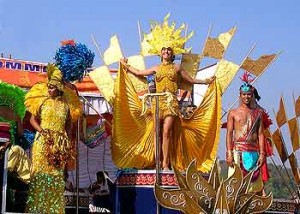
February is carnival time in Goa. For three days and nights it is all lively processions, floats and non-stop festivity.
Goa Carnival
It was introduced by the Portuguese – a rowdy celebration in which flour, eggs, oranges, lemons, mud, sand-filled gloves along with dirty water, various liquids and glue were aimed at passersby. Used kitchen utensils were also thrown out of windows, perhaps to discard the old before the Lenten fast.
The legendary king Momo – the King of Chaos takes over the state and gaiety prevails. The carnival is a feasting-drinking-merry making extravaganza before the austere 40 days of Lent. It concludes with the famous red-and-black dance held by the Club National in Panjim.
The origins of carnival are probably Pagan in nature, of ancient Roman and Grecian vintage. The Goan carnival is also called Intruz and culminates in a parade on Fat Tuesday. In the villages you will see a different face of the fest. You will find local youths dancing in front of the main cross of the vaddo, to the beat of drums around an oil lamp, singing songs about their ancestors. The tempo of the drum speeds up and feni flows. Some gets into a trance…….. Local Konkani influence includes replacing of dirty water with colored powder and water similar to Holi. That is India – sincerely yours.
In 2011, Goa Carnival is celebrated for 3 Days from 5th March – 8th March (Saturday – Tuesday)
Do not miss to explore the Incredible India travel and celebrate at Goa Carnival (Goa the hottest travel destination of India.) before you enjoy the ICC World Cup 2011 Cricketing Carnival in India. ……….. Toshali Tours and Travels is a travel management company and tour operator recognised and approved by Ministry of Tourism, Government of India and Department of Tourism, Government of Orissa. For More details on Reservation and Accommodation for the Goa Carnival, Incredible India tour package visit at http://bit.ly/fUoIQH …….. You can also contact your Travel Consultant “Metu” atmetu@toshali.in for HELP with your travel and accomodation when you are in India during the ICC WorldCup 2011
May Goddess Saraswati, who is fair like the Jasmine coloured moon and whose garland is like frosty dew drops, who is adorned with radiant white clothes and on whose beautiful palm and arm rests the Veena, those throne is a white lotus, and who is surrounded and respected by the Gods beginning with Lord Brahma, Lord Vishnu and Lord Maheshwar, protect me. I implore Her to totally remove my laziness and sluggishness .
Mother or Maa Saraswati is the goddess of knowledge, music and the arts. She is the consort of Brahma and the “Mother of the Vedas”.
Saraswati is known as a guardian deity in Buddhism by offering protection and assistance to practitioners. In Burmese, she is Thurathadi, in Chinese as Biàncáitiān, in Thai as Surasawadee and in Japanese as Benzaiten.
Goddess Saraswati represents intelligence, consciousness, cosmic knowledge, creativity, education, enlightenment, music, the arts, and power. She is worshipped for “secular knowledge”, and “divine knowledge”.
In hindu mythology, in some Skanda Purana, she is sister of Shiva (Shivaanujaa) and in some Tantras sister of Ganesha.
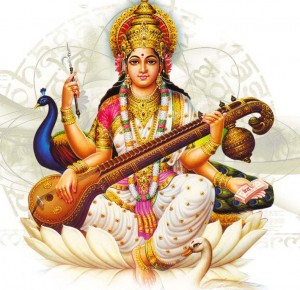
Goddess Saraswati represents the union of power and intelligence from which organized creation arises. Saraswati possesses all the learning of the Vedas, scriptures, dancing, music and poetry. She is wisdom, fortune, intelligence, nourishment, brilliance, contentment, splendor and devotion. She is depicted as a gracefully seated or standing goddess, holding a veena, a musical instrument, a rosary and the scripture. The ‘bahon’ are the ‘rajhansa’ (swan) and the ‘mayur’ (peacock). The instrument symbolizes knowledge of the arts held in high esteem in Vedic tradition. The rosary points to the meditative qualities necessary to acquire knowledge. The scripture is knowledge in itself. The swan signifies discrimination between right and wrong, while the peacock points to the mundane, the unstable.
In Eastern India, Odisha,West Bengal, Bihār and Assam. Goddess Saraswati is worshipped on Vasant Panchami and also known as Sree Panchami, in Magha month (January–February). day and in Southern India on the Navratris. She is bedecked in all white and adorned in yellow color dress on the day and books and writing instruments are placed before her.
In the eastern parts of India, Palash or flame of the forest and marigold flowers form an important part of her offering. Children are also initiated into the world of learning on the day. Saraswati Puja is also known as Boi or Bahi Puja ( a worship of books)
In the South India Lotus and jasmine are offered. It is all vegetarian fare all day long and the most alluring part was that the strictest of all parents would not ask you to study on the day. It is believed that the Goddess blesses the books and writing instruments etc on that day.
This sloka (mantra) of Goddess Saraswati can be recited daily to improve memory, power and concentration in studies.
In 2011, Saraswati Pujais celebrated all overIndiaby Hindus on 8th February 2011 (Tuesday)
Toshali Resorts offers for India festivals to visit Orissa, West Bengal, Assam, India for Saraswati Puja festivals. Book Your Package at. For More Information, contact your Travel Manager Metu at metu@toshali.in
The colorful festival is observed across the Indian subcontinent and
places with large Hindu Diasporas like Suriname, Guyana, South Africa,
Trinidad, UK, USA, Mauritius, and Fiji. In West Bengal and Bangladesh
it is known as Dol-yatra. The most celebrated Holi is that of the Braj
region, in locations connected with Lord Krishna: Mathura, Vrindavan
and Barsana. Holi lasts here to up to sixteen days.
Legend says Demoness Holika, carried little Prahlad into the fire to
destroy him and got burnt – Choti Holi – a day before the main
festival celebrates this with a bonfire. On Holi day, also known as
Dhulandi or Dhulendi by people throw colored powder and water at each
other.
In Braj bhoomi Holi commemorates of the divine love of Shri Radha
Krishna. Krishna, legend says complained to his mother about his dark
and Shri Radhika’s fair complexion. Yashoda asked him to color Radha’s
face. The celebrations mark the end of winter and ushers in spring. It
is celebrated on the last full moon of Phalguna (February/March).
Rangapanchami, the fifth day of the full moon marks the end of
festivities.
An alternative story marks Holi as the destruction and recreation of
Kamdeva by Lord Shiva. Holika Dahan is referred to as Kama Dahanam in
Andhra Pradesh.
Reference of Holi is found in Narada Purana and Bhavisya Purana and
Harshavardhan’s Ratnavali.
Barsana’s ‘Lath mar holi’ is unique. It is Shri Radha’s village. The
Kumaoni holi(s)– Baithaki, Mahila Holi and Khari Holi are an unique
journey into melody, besides sharing other traditional aspects.
Holi is called Phagwa in Bhojpuri. In Bengal ‘Dol Yatra’ sees
traditional fanfare and in Orissa Lord Jagannath replaces idols of
Shri Radha Krishna.
Holi is a part of Goan or Konkani spring festival known as Śigmo. In
Gujarat some celebrations reflect the rituals of Barsana.
Holi merges with the centuries-old festival of Yaosang in Manipur. The
folk dance ‘thaabal chongba’ is performed to beats of drum on the full
moon night of Lamta (Phalgun).
“KhaaKey Gujia, Pee KaeThandai,
Laagak ThoraThoraSaRang,
BaajaKeBholakAurMridang,
KheleHoliHum Aap KSang” ~ HOLI MUBARAK
The colorful festival is observed across the Indian subcontinent and places with large Hindu Diasporas like Suriname, Guyana, South Africa, Trinidad, UK, USA, Mauritius, and Fiji. In West Bengal and Bangladesh it is known as Dol-yatra. The most celebrated Holi is that of the Braj region, in locations connected with Lord Krishna: Mathura, Vrindavan and Barsana. Holi lasts here to up to sixteen days.
Legend says Demoness Holika, carried little Prahlad into the fire to destroy him and got burnt – Choti Holi – a day before the main festival celebrates this with a bonfire. On Holi day, also known as Dhulandi or Dhulendi by people throw colored powder and water at each other.
In Braj bhoomi Holi commemorates of the divine love of Shri RadhaKrishna. Krishna, legend says complained to his mother about his dark and Shri Radhika’s fair complexion. Yashoda asked him to color Radha’s face. The celebrations mark the end of winter and ushers in spring. It is celebrated on the last full moon of Phalguna (February/March). Rangapanchami, the fifth day of the full moon marks the end of festivities.
An alternative story marks Holi as the destruction and recreation of Kamdeva by Lord Shiva. Holika Dahan is referred to as Kama Dahanam in Andhra Pradesh.
Reference of Holi is found in Narada Purana and Bhavisya Purana and Harshavardhan’s Ratnavali.
Barsana’s ‘Lath mar holi’ is unique. It is Shri Radha’s village. The Kumaoni holi(s)– Baithaki, Mahila Holi and Khari Holi are an unique journey into melody, besides sharing other traditional aspects.
Holi is called Phagwa in Bhojpuri. In Bengal ‘Dol Yatra’ sees traditional fanfare and in Orissa Lord Jagannath replaces idols of Shri Radha Krishna.
Holi is a part of Goan or Konkani spring festival known as Śigmo. In Gujarat some celebrations reflect the rituals of Barsana.
Holi merges with the centuries-old festival of Yaosang in Manipur. The folk dance ‘thaabal chongba’ is performed to beats of drum on the full moon night of Lamta (Phalgun).
In 2011, Holi, the festival of colours in India will be celebrated on 20th March. Lets the colour shower the Joy of life….
“Holi Mae Sab Miljate Hai, Khusiyo Ke Rang Khil Jate Hai” Early Bird Reservation and Booking Open for Family and your friends to celebrate colourful Holi at Toshali Sands, Puri http://bit.ly/eZcJOI and Toshali Royal View Resort, Shimla http://bit.ly/hugCf4. You can also contact “Metu” your Travel Consultant at metu@toshali.in..
Maha Shivaratri or Shivratri Utsav is a famous Hindu festival in honor ofLord Shiva, one of the Trimurtis in Hinduism. Sivaratri, which literally means “Great Night of Shiva” or “Night of Siva”, is observed on the 13th night/14th day in the Krishna Paksha on the month of Phalgun (February – March) in the Hindu Calendar.
It is said that on this day Lord Shiva performed the ‘Tandava’, he was married to Goddess Parvati, the Lord consumed the deadly poison – halahal that emerged from the Besides a ‘Maha Shivratri’ there is also a Shivratri for each month. It churning of the ocean to save his creation. It has great significance in Hinduism. According to scriptures, worship of Lord Shiva on Shivratri that falls on the 14th day of the dark fortnight in the month of Phalgun pleases the Lord most. Legend says Lord Shiva himself said this to devi Parvati when she asked about the form of worship that pleased him the most – as he finished his ‘Anandatandava’ after creating the universe.
The Puranas mention stories where being Lord Vishnu and Brahma unsuccessfully tried to find the beginning or end of Lord. There is also the story of Raja Chitrabhanu as Bhisma of Mahabharata narrated on his deathbed.
Lord Shiva is offered cooling substances like water, milk, ‘Bel’ leaves etc and a ritual fast and reading or listening to associated stories of the lord are part of the puja. Associated rituals include Tripundra – the three horizontal lines of holy ash on the brow, with a dot as the third eye. The three lines represent the soul’s three bonds: anava, karma, and maya. The made of burnt cow dung, is symbolic of the transient physical body form and the urgency for spiritual attainment. The rudraksh is worn to please the Lord Shiva.
Besides a ‘Maha Shivratri’ there is also a Shivratri for each month. It happens on the ‘Krishna Paksha Chaturdasi’ of each lunar month.
The night after ‘Mahashivratri’ is amavasya, dark night when, symbolically nothing but ignorance and injustice prevails. This night signifies Kali yug. Lord Shiva symbolically ‘arrived’ before the onset of Kali yug to lessen the suffering of his creation.
Maha Shivratri Legends
There are numerous interesting legends associated with Maha Shivaratri festival.
Rudra Tandav
Divine Wedding
Linga Purana
Samudra Madhan
In 2011, the date of Maha Shivratri Festival is on 2nd March 2011 in South India and 3rd March 2011 in North India.
Toshali Resorts brings you Maha Shivaratri Packages from 01-04 March 2011. With, welcome drink, Cookies / Cake in room, bed tea & afternoon tea with cookies, B/F, lunch or Dinner, on buffet or fixed menu basis, For Reservation and booking visit at http://bit.ly/eihdHnand you can also contact toshali tour and travel advisor at metu@toshali.in
halahal that emerged from the churning of the ocean to save his
creation. It has great significance in Hinduism. According to
scriptures, worship of Lord Shiva on Shivratri that falls on the 14th
day of the dark fortnight in the month of Phalgun pleases the Lord
most. Legend says Lord Shiva himself said this to devi Parvati when
she asked about the form of worship that pleased him the most – as he
finished his ‘Anandatandava’ after creating the universe.
The Indian constitution came into effect on January 26, 1950, celebrated thereafter as Republic Day. The date was chosen as it on this day in 1930 declaration of independence or ‘Purna Swaraj’ was made at the Lahore Congress. The site is commemorated by the ‘Minar e Pakistan’ in Lahore.
India’s venture on the path of democracy was lauded by none other than then British PM Sir Antony Eden. On this day the Prime Minister lays a wreath at the Amar Jawan Jyoti, at the India Gate, in the memory of unknown soldiers. Then the President arrives along with the chief guest of the occasion. The National flag is unfurled; the National Anthem is played along with a 21-gun salute. Awards for valour, like the Ashok Chakra etc. are given away by the President and the regiments of Armed Forces start their march past. IAF does a fly-past and cultural glimpses from various parts of the country are showcased. Young brave hearts follow in regal procession. Celebrations in states are presided over by Governors. This is one of India’s three national holidays. On this day India realized the dream of all those freedom fighters who, fought for and sacrificed their lives for freedom.
Personally January 26 in the school days meant getting up early and cycling to school, dressed in pristine whites and snug in the knowledge that there would be no classes. I was too young to understand implications of weighty terms like freedom and independence but there was a sense of pride when the tricolor fluttered in the chilly January breeze. On the way back home we would be doubly happy with a goody bag, from the school adding to it. Pedaled a bit harder, no point in missing the cricket match.
26th January is a national holiday all over India. Visit INDIA during this time and you’ll be able to witness and enjoy popular regional musical and dance events, as well as traditional festivals and parades. Kites flying, camels, and cattle race are just some of what’s on offer along withRepublic Day Parade!
Let Toshali Resorts Travel and Trip Planner help you get started. Republic Day Packages at Toshali Resorts, from 24th January (monday) – (Sunday) 30th January 2011) – for more details visit http://bit.ly/fV6Bs2 or simply post a mail to metu@toshali.in
17th November 2011—–Thursday-Bicha Sankranti / Manabasa Gurubar (Begins)
19th November 2011—–Saturday-Prathamastami
21st November 2011—–Monday—Uthapan Ekadasi
24th November 2011—–Thursday-Manabasa Gurubar
Odiya Festivals in December 2011
01st December 2011—–Thursday-Manabasa Gurubar
06th December 2011—–Tuesday–Mokhada Ekadasi
08th Decemberr 2011—–Thursday-Manabasa Gurubar
16th December 2011—–Friday—Dhanu Sankranti
21th December 2011—–Wednesday-Saphala Ekadasi
24th December 2011—–Saturday-Bakula Amabasya
Toshali Resorts brings exclusive package for tourist, travellers, guest, visitors, pilgrims to witness, participate and celebrate the famous festivals in Orissa. To know more and for package reservation, visit at http://bit.ly/bsZGDN.. To know about the Odisha festivals, post a comment and send a mail to metu@toshali.in
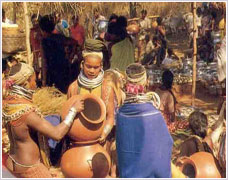
Agni Utsav is recognised as the national festival in the state of Orissa. It is an agricultural festival the farmers of the state with lots of religious fervor and a splash of colors with celebration styles varying from district to district and tribe to tribe. The tribal families starts preparing much in advance for the Agni Utsav festival.
Paraja Tribes
Orissa holds a great cultural and traditional importance in the country. Agni Utsav, the festivals that revolve around belief in the power of “Agni” – “Fire”. The religious belief of the state is depicted through this festival, where enormous heaps of hay is laid out in the fields on the day of the celebrations which showcase the collective work and bonding among the villagers.
Traditions and rituals revolves around the Agni Utsav famous among the tribes and farmer family of Orissa. Starting week before, the women clean the home and the male members collect heaps of hay prior to a week to burn them on Agni Utsav Day. Farmers believe that burning the hay foretells about the crops throughout the year.
The significance of the flames of the burning heap of hay bring in many predictions about crops. A westward tilt of the heap indicates floods; tilt on the eastern side means high tides coming to the farm ground. The fire flame tilting north is believed to be auspicious indicating good yield.
The ritual and ceremony of offering prayers to the God of Fire is another part of the celebration. “Agnidev” – The “Fire God” would protect the crops from fire and hazards.
Dongria Tribe
Agni Utsav has been the major attraction for International tourist and travelers from different states in India, Tours and Travel Management company are promoting Agni Utsav through the concept of “Village and Rural Tourism” and helping boost Orissa Tourism. Tourist witness and participate inlarge with the tribes and local farmers to celebrate this festival and experience the grass root feeling.
Agni Utsav is generally celebrated in Mid January to Mid February every year. The date of festival keeps changing every year. In 2011, Agni utsav will be celebrated on January 25th.
Toshali Resort have made exclusive arrangement for the “Agni Utsav”, to know more about the village tourism package, visit at http://bit.ly/gD7UMw.. To know more about the custom “Village and Rural Tourism” package, send your details request to your Travel Consultant Metu atmetu@toshali.in
Visit our blog on “Rural and Tribal Tourism is the New Trend in Incredible India” – http://bit.ly/d0Eubd
Pot Rice to Sun God
Sugarcane to cow and ox
Sweet rise to you and me
Good milk to friends and family
Contributed by: M.Narayanan
Pongal is known for re-bonding with family and friends. It is It is the biggest harvest festival of Tamil Nadu and celebrated as thanks giving occasion to the nature in mid-January every year. Marked with merrymaking and feasting.
Happy Pongal (Image courtesy way2readonline)
Pongal festival date is derived from Solar Calendar, usually remains the same. For Hindus this festival is extremely auspicious and astronomically significant. Every year the sun begins its six-months-long journey northwards “Uttarayan” as it is called and moves into the zodiac Capricorn “Makara Rashi” This celestial festival is celebrated as Pongal in South India.
Pongal is celebrated when the fields are blooming, this signifies the prosperity and good harvest especially for the farming community. During the Pongal celebrations farmers express their gratitude to Sun God and the cattle and thank them for a good harvest.
Pongal Calendar 2011
Bhogi Pongal 2011 – January 14
Surya Pongal 2011 – January 15
Mattu Pongal 2011 – January 16
Kaanum Pongal 2011 – January 17
Pongal delicacies are Venn Pongal, Sarkarai Pongal, Chakara Pongal, Sweet Pongal Recipe, Rava Pongal, Khara Pongal, Rice Pongal along with soft idlis, paper dosai, boonda, pineapple rasam, rajma curry, bread idli and milk payasam.
Across India, Pongal festival is celebrated as “Makar Sankranti” in central India, “Bhugali Bihu” in Assam. In West Bengal, it is celebrate as the “last day of Bengali month Poush”, here thousands of devotees take bath in Gangasagar, the point where the holy river Ganga meets the sea, to wash away all the earthly sins.
What better way can there be to make this Pongal Festival memorable for your dear one than showering with great Pongal gift of Family Vacation at Toshali Resorts, along with home furnishings, home appliances, electronics, apparel to flowers, cakes, sweet hampers and many more.
In 2010, Pongal is celebrated on January 14th
Toshali Resorts, brings you the exclusive Pongal Festival Offer, to know more about the travel details, accommodation and package, visit at http://bit.ly/gD7UMw , tourist can also send their travel details for exclusive South India Tour to Travel Planner Metu at metu@toshali.in