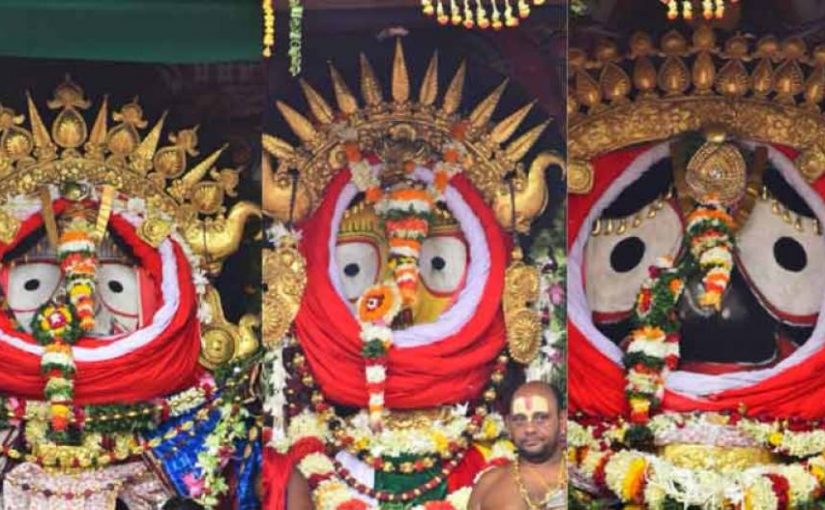
“Suna Besha,” also known as the “Golden Attire,” is a significant and auspicious event observed in the Jagannath Temple of Puri, Odisha, India. During this event, the deities Lord Jagannath, Lord Balabhadra, and Devi Subhadra are adorned with gold ornaments and attire. This special dressing happens on five occasions throughout the year, but the most prominent is observed on Ashadha Shukla Ekadashi (the 11th day of the bright fortnight of the Hindu month of Ashadha) during the annual Rath Yatra (Chariot Festival).
Key Features of Suna Besha:
- Golden Ornaments: The deities are decorated with gold ornaments weighing several kilograms. These ornaments include crowns, necklaces, earrings, and various other adornments that cover the entire body of the deities.
- Public Viewing: During the Rath Yatra, Suna Besha is conducted when the deities are placed on their chariots. This allows thousands of devotees to witness this grand event, as the deities are usually within the sanctum sanctorum of the temple and not visible to the public.
- Rituals and Traditions: The adornment process is carried out by the servitors of the Jagannath Temple, following ancient traditions and rituals. The event is marked by chants, hymns, and the playing of musical instruments.
- Significance: The golden attire symbolizes the wealth and prosperity that the deities bestow upon their devotees. It is believed that witnessing Suna Besha can bring good fortune and blessings.
- Security Measures: Given the high value of the gold ornaments, stringent security measures are taken to ensure the safety of the deities and the ornaments during this event.
