Tirupati Tirumala Brahmotsavam : Amazing temple festival of Lord Venkateswara

Brahmotsavam is a celebration of nine days at the temple of Lord Sri Venkateswara at Tirupati. This temple is cleaned according to the guideline given in the religious texts.  It is decorated with flowers and mango leaves.

The significance of each day ritual and holy celebration are … :

Day1: Pedda Seshavahana:

The first day of Brahmotsavam is commenced with the hosting of Garuda Dhwaja(A religious flag, with the sign of Eagle on it), It is followed by a  panoramic procession of Lord Venkateswara around the temple. This event starts at 10pm and continues till midnight. The vehicle on which the Lord Venkateswara is carried is called Pedda Seshavahana and is believed to be the manifestation of Adisesha (The thousand-headed serpent, on whom Lord Sri Maha Vishnu rests in his abode). The magnanimous march lasts for the first two day of Brahmotsavam.

Day 2: Chinna Seshavahana

The second day starts with the Lord’s procession, this time on Chinna Seshavahana. Whole day deities are worshipped and in the night they are taken to the Uyala Mandapam for the Unjal Seva. The day slips away in the worship of the Lord and in the night the deities are taken to the Uyala Mandapam for the Unjal Seva (swinging). This is followed by procession on a Hamsavahana through the temple streets. It is believed that Hamasavahana signifies purity, and the Hamsa (swan) on it is known to for it is ability to differentiate between good and bad, and said to denote peace.

Day 3: Simhavahana

Simhavahana performed on third day. On this day deities are carried on Simhavahana- a vehicle with lion’s emblem on it that denotes command and authority. It is considered that Lord assumes the form of Narasimaha (a mythological character who was half human and half lion) to kill the demon named Hiranyakasipu.  After the procession the deities are once again taken to the Unjal Seva followed by an exciting ride on Mutayalapandri Vahana; the symbol of purity.

Day 4: Kalpavriksha Vahana

The fourth day comprises of two processions, one on the Kalpavriksha Vahana in the morning followed by a procession on Sarvabhoopala Vahana in the night. According to legend, Kalpavriksham is name of a tree that grants boon

Day 5: Garuda Vahana or Mohini Avatarotsavam

Garuda Vahana or Mohini Avatarotsavam is celebrated on the fifth day to commemorate the lord’s incarnation as Mohini to assist the Devtas during Ksheerasagarmadhanam.

In the Vaishnava Puranas, Garuda is also called periyatiruvadi, meaning the first devotee. Therefore, Lord Venkateswara selected Garuda as his vehicle for the most important day of the Brahmotsavam.

Day 6: Gaja Vahana

On sixth day,  Gaja Vahana is celebrated, it is believed that in the night Lord mounted on the Gaja Vahana(elephant).

Day 7: Suryaprabha Vahana

On the seventh day of Brahmotsavam, Lord rides on Suryaprabha Vahana. According to Hindu Mythlogy Lord Vishnu is believed to be the center of the universe. To symbolize this, Lord Venkateswara uses the Suryaprabha(light of the Sun).

Day 8: Rathotsavam

The Lord is taken on a procession seated on a chariot known as Rathotsavam on the eighth day of Brahmotsavam. The idols of Lord Sri Krishna and the four horses are placed before the decorated idols of the Lord and his consorts.

Day 9: Chakrasnana Mahotsavam

On the last day, Pallaki Seva and Chakrasnana Mahotsavam in the morning and Dhwajavarohanam are performed in the evening. The processional images are anointed with turmeric powder, oil and other auspicious ingredients and Abhishekam is performed. Sudarsan Chakram is given a bath in the Swami Pushkarini. The Garuda flag is then lowered.

This year Tirumala Brahmotsavam festival is celebrated on 9th to 18th October 2010 at Tirupati. Lakhs  of tourist and pilgrims pay holy visit at Tirupati Tirumala Brahmotsavam Festival every year. May Lord Venkateswara call you to make the holy pilgrim this year.

Toshali Travel and Tours offers budget festival Holiday packages and arranges exclusive accommodation for Tirumala Brahmotsavam Festival at Tripati on demand, click on http://bit.ly/bRcZKo . Toshali Travel and Tours is authorised Travel and Tour Operator, recognized and accredited by Ministry of Tourism, Government of India

To know more on the Tirumala Brahmotsavam Festival at Tripati pilgrim package, post you comments or Contact our Toshali Holiday Planner at metu@toshali.in

Do post your comment and suggestions, if you feel we have left out any information that would be helpful for your friends, family members. Also share this blog with Facebook, Twitter, Orkut and other Social Networking sites….

Bhai Dooj Festival : Hindu Ritual for Sister & Brother

Bhai Dooj. is one of the major festivals of India, it is also spelt as Bhaidooj, Bhaiduj or Bhai Duj. ‘Bhai’ means brother and ‘Dooj’ means two days after new moon, this festival is celebrated between brothers and sisters other than Raksha Bandhan to strengthen the bond of their love. On this auspicious day, sisters put Tilak on their brother’s forehead and pray for their long life.  In return, brother promises their sisters to stand by their side in all hardships of life. This is the most awaited festivals in India. Every year this festival comes two days after Diwali in Karthik month.

According to the custom and rituals sister applying tika on the forehead of the sister, giving him eatables and in return receive gifted, the women and children sit around and hear the story.

India is a country of varied cultures, customs and traditions. The festival of Bhaiya Dooj is known by various names in different regions and has its own regional name that signifies different ceremonial celebrated connotations.

  • Bhai Phota is celebrated in the state of West Bengal on the Dvitya i.e. on the second day after the Kali Puja
  • Bhai Tika / Bhai Teeka is celebrated in Nepal on the fifth and the final day of the popular Festival of Light called ‘Tihar’ or ‘Panchak Yama’  it is also known as ‘Bhai Tihar’ and it is a part of Tihar celebrations in the Himalaya Kingdom.
  • Bhathru Dwithiya is also known popular name for Bhai Dooj, it falls on the fifth and last day of Diwali festival. ‘Dwitheya Day’ meaning, second day after new moon. Sisters pray for their brothers long life.
  • Bhatri Ditya is just another name of the famous Hindu festival of Bhaiyya Dooj, This festival is celebrated to strengthen the beautiful bond shared between a brother and a sister, it is also considered a part of Diwali celebrations at many parts of India.
  • Bhai Bij, Bhaubeej or Bhav Bij amongst the Marathi speaking community in the states of Maharashtra and Goa. As like Bhaidooj festival celebrations in rest of India, Bhai Bij, Bhaubeej or Bhav Bij falls on the last day of five-day-long Diwali festival, here also in western India in Bhaubeej festival sisters pray for their brothers long and happy life as they perform tika ceremony.
  • Yamadwitheya is from the legend of god Yama Raja (the Hindu mythological god of Death)himself and it is one of the most commonly told story of Bhai Dooj. Here, the story told as after Yama Raaj long separation from his sister Yamuna or Yami. On the Dwitheya or the Dooj or the second day of the new moon When Yami met his brother Yama (also know as Dharam Raj) and welcomed whole heartedly, applied red tilak on his brother’s forehead and treated him a special meal. Yamaraj was overwhelmed receiving the warm welcome from his sister and he announced that whosoever receives a red tika from his sister on the day of ‘Dooj’ will not be hurled to hell.  Since that day Bhai Dooj is also known as Yamadwitheya.

In 2010, Bhai Dooj festival is celebrated on 7th November (Sunday)

Toshali Travel and Tours offers budget festival Holiday packages and arranges exclusive accommodation for Bhai Dooj festival on demand, click on http://bit.ly/aphUEF. Toshali Travel and Tours is authorised Travel and Tour Operator, recognized and accredited by Ministry of Tourism, Government of India

To know more on the Bhai Dooj festival, post you comments or Contact our Toshali Holiday Planner at metu@toshali.in Do post your comment and suggestions, if you feel we have left out any information that would be helpful for your friends, family members. Also share this blog with Facebook, Twitter, Orkut and other Social Networking sites….
Bateshwar Fair : The Colourful Annual Cattle Festival

Bateshwar fair, popularly known as Bhateshwar Mela is a large fair held at Bateshwar, an important cultural and spiritual center situated 70km from Agra in Uttar Pradesh. Large number of devotes come here from far region to worship Bateshwar Mahadev (Lord Shiva) the presiding deity.

108 temples at Bateshwar - Photo courtesy travel247.tv

Here at Bhateswar, you will find temples dedicated to the gods and goddesses of the Hindu Pantheon. It is a place of great religious importance to the Hindus. The Most striking feature of Bateshwar is its towering cliffs of clay and its impressive row of 108 white temples strung along with the slow flowing Yamuna River.

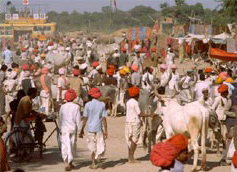
Every year the annual cattle fair is held at the banks of Yamuna River in the ‘Kartik’ month of Hindu calendar i.e in the month of November. The livestock fair has a very colorful ambience at Bhateshwar Mela. Thousands of cattle mainly Elephants, Camels Cows, Bullocks, Buffalos, Goats come here from different part of India assemble at this fair or mela adorned in beautiful rags and colors.

Annual Cattle Festival - Photo courtesy bharatonline.com

A wide variety of wild and domestic birds and pets are also available here for sale. Owners and buyers indulge in serious business combined with the gaiety of a market place. Various regional folk based cultural programs are organized here to entertain the tourist coming in from different countries of the world and states of India

In 2010,  Bateshwar Fair is celebrated on 12-26 November.

Toshali Travel and Tours offers budget festival Holiday packages and arranges to be at the Bateshwar Mela – the annual cattle festival And customized your accommodation on demand. Toshali Travel and Tours is authorised Travel and Tour Operator, recognized and accredited by Ministry of Tourism, Government of India

To know more on the Bateshwar Mela – the annual cattle festival, post you comments or Contact our Toshali Holiday Planner at metu@toshali.in

Ayudha Mela : The festival of triumph

Ayudha Puja is a local festival celebrated in the month of September/ October in Uttar Pradesh. Ayudha is the birth place of Lord Rama according to the Hindu Mythology so people worship Lord Rama on this day. Mythology also states that Ram was exiled by his father in the jungle and in the process he lost his birthright to be the King.

On this day people clean their instrument and then worship their instrument that they use for their earning. Worship of weapons and tools depict the respect towards the tools which helps in earning. Auto drivers clean and decorate their autos while shopkeepers do the same for their shops and worship Goddess Lakshmi. In modern time, people also worship their vehicles and cooking vessels on this day.

The principal goddesses worshiped during the Ayudha puja are Saraswathi(the Goddess of wisdom, arts and literature), Lakshmi (the goddess of wealth) and Parvathi (the divine mother), apart from various types of equipment. Many People mark this festival by visiting temple of Lord Rama and Sita, Pooja depicts the celebration of Victory of good over evil, which also has a vast social bearing on the people of Uttar Pradesh. Different regions follow different traditions for celebrating this festival. Ayudha Puja is the regional festival and celebrated in every nook and corner of Uttar Pradesh. On the ninth day of the Dasara festival, weapons and tools are worshiped. It is an integral part of the Dussehra festival celebration- festival of triumph.

In 2010, Ayudha Puja festival is celebrated on October 16.

Toshali Travel and Tours  offers budget festival Holiday packages and can customized your accommodation on demand. Toshali Travel and Tours is authorised Travel and Tour Operator, recognised and accredited by Ministry of Tourism, Government of India

To know more on the Uttar PradeshTourism – Ayudha Puja and Mela , post you comments or Contact our Toshali Holiday Planner at metu@toshali.in

Aranmula Vallamkali – The Snake Boat Race Festival in Kerala

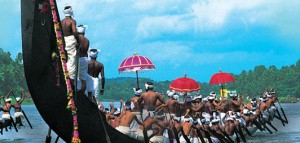
Aranmula Vallamkali also known as Aranmula Uthrittathi Boat Race, it is the annual snake boat water sports festival celebrated inAranmula village situated on the banks of Pamba River, in Pathanamthitta District, Kerala in the month of September during Onam festival. Vallamkali refers to boat race competition held during the last two days of the festival.

Snake Boat Race in Kerala - Photo courtesy Kerala Tourism

In this competition the participants, are trained to row these boats, they compete not merely for winning the competition but to celebrate the anniversary of the Shri Krishna idol installation , who is the main deity at the Aranmula  Parthasarathy Temple .

This annual festival attracts tourists from all over the world.  Here you will find snake boats in this colorful carnival called Palliyodams.  The structure of the boats resembles snakes that are 100 feet in length with its front tapering and the rear portion towering to a height of about 20 ft.  During this race 39 to 41 of such boats participate that can easily accommodate 120 people including oarsmen, singers and helmsmen.

Apart from this the famous boat race, other rituals including offering prayers to Lord Krishna early in the morning on the day of the boat race.  At this tome all boats assemble near the temple to seek blessing of Lord.  After the Morning prayers other rituals, the race starts from the afternoon, with groups of men and singers all shouting and singing in a rhythmic manner.

Tourist attractions in Aranmula :

  • Aranmula Kannadi – Aranmula is famous for Aranmula Mirror or Aranmula Kannadi – the world only hand-made mirrors made entirely from metals, without using glass.
  • Aranmula Parthasarathy Temple – Sree Parthasarathi Temple at Aranmula is place where Lord Krishna Temples in Kerala.
  • Chengannur Mahadeva Temple – Chengannur Mahadevar Kshetram is one of the oldest Lord Shiva Temples in Kerala.
  • Other religious attraction Ambalappuzha Sri Krishna Temple, Guruvayoor Temple, Thiruvarppu Krishna Temple and Trichambaram Sree Krishna Temple.

In 2011 this festival will celebrated on the end of Onam festival. Toshali Travel and Tours  offers budget festival Holiday packages and arranges, to be at nature “Gods own Country”. And customized your accommodation on demand. Toshali Travel and Tours is authorised Travel and Tour Operator, recognised and accredited by Ministry of Tourism, Government of India

To know more on the Kerala Tourism – Aranmula Vallamkali – The Snake Boat Race Festival in Kerala , post you comments or Contact our Toshali Holiday Planner at metu@toshali.in

Anant Chaturdashi : The last day of the Hindu festival of Ganeshotsav

Anant Chaturthi also known as Anant Chaturdashi is the last day of the Ganesh festival” celebrated in states like Maharashtra, Karnataka, Gujarat and Andra Pradesh. This day follows the immersion of the idols of the beloved lord.

Anant Chaturdashi Festival

On the day of Anant Chaturdashi, the idols of Lord Ganesha installed at home and various “Mandapas” (display place) are taken to a pond, lake, river or a sea in great procession with slogan: “Ganpati Bappa Morya, Agle Baras to jaldi aa” (“Father Ganpati, come again next year”). On this day, people travel to the water front with the idols, big and small, dancing and singing in large procession. The 10 day long festival comes to an end after the immersion ceremony is over.

During ceremony, Vedic hymns from the Rig Veda and Ganapati Atharva Shirsha Upanishad and Ganesha Stotra from the Narada Purnana are chanted. The whole community comes to worship Ganesha in beautifully done tents.

On Anant Chaturdasi, Lord Ananta Padmanabha is worshipped and Ananta Vrat is observed. The Vrat is an observance is followed for 14 consecutive years for marital bliss, happiness and prosperity. This vow is observed by married couple. By performing Anant Chaturdasi puja, it is believed that a person is relieved of all sins committed during his lifetime.

Anant Chaturdashi in 2011 is on Thursday, the 1st of September. Toshali Resorts, welcomes all to be the part of “Anant Chaturthi” Festival experiencing – exclusive arrangement is been done every year for the guest to witness and be the part of the festival. For Hoilday Package Reservation write to metu@toshali.in

If you feel, we have missed any information that is helpful for your friends visiting this blog, do post. We would be glad to receive your comments and conversation.. We are looking for photos of “Anant Chaturthi” Festival, please fell free to post.

Dev Deepavali : Light Festival of Gods in Varanasi, India

Dev Deepavali is celebrated on the fifteenth day of Diwali. It is a tribute to river Ganga at Varanasi. It is held on Kartik Poornima. The month of Kartik (October – November) has celestial significance. The Ghats of Varanasi sparkle with earthen lamps, lighted amidst chanting of Vedic hymns. Belief is that on the day of Dev Deepavali, Gods come down to bathe in the Ganges. This festival coincides with the Jain festival and Guru Nanak Jayanti.

The Uttar Pradesh Tourism department organizes Ganga Mahotsav around this period. Devotees start assembling from the day of the Prabodhini Ekadasi. Celebration is usually held on the Dasaswamedh Ghat. Reputed artists perform to lend a creative touch to the festivities.

The ‘Ganga-Aarti’ is an important event in the evening. Almost all Ghats organize their own ceremony. Huge lamps are set ablaze and the priest holds forth the lamp as the multitude chants the hymns. As evening sets in the magical reflection of the thousands of flickering lamps lends a heavenly touch to the ancient city.

Dev Deepavali Festival Celebration is on November 21’2010

Toshali Travel and Tours  offers budget festival holiday packages and arranges, to be at “Dev Deepavali Festival” at Varanasi, Uttar Pradesh. And customized your accommodation on demand, book your package reservation at with Toshali Travel and Tours. Toshali  is authorised Travel and Tour Operator, recognised and accredited by Ministry of Tourism, Government of India

To know more on the Dev Deepavali Festival, post you comments or Contact our Toshali Holidays Planner at metu@toshali.in

Karva Chauth Festival : Married women seeking long life of their husbands and marital bliss

Karva Chauth sees married women fast from sunrise to moonrise for the safety and long life of their husbands. The fast is observed on the fourth day after the full moon, in the month of Kartik.

Karva means diya and chauth means ‘fourth’ in Hindi. Women prepare by buying cosmetics, jewelry and puja items. They fast through the day. In the evening, a women-only ceremony is held. Women dress in fineries sit in a circle with their puja thalis. The story of Karva Chauth is narrated and the song is sung around an idol of Gaur Mata or Parvati.

Once the moon is visible, the fasting woman view its reflection in a vessel filled with water, through a sieve, or cloth. Water is offered to the moon for its blessings. She then views her husband’s face in the same manner.

On this occasion of Vrat (Fast) a Kalash (small container) is filled with either milk or water. In that Kalash Pancha Ratna (Five different pieces of  different metals (gold, silver, copper, brass and iron) then this kalash is  presented to  Brahmin and also it was exchanged with other married women. After it women offer prayers to Shree Lord Ganesh : “Let the offerings of this Karva  bring life to my husband and may my Saubhagaya be everlasting “and express such desire that ‘May my death precede that of my husband so that I can enter the chitaa (funeral pyre) as a bride (not as a widow).

According to legends this narrative was took place between Shiva and Parvati. Shiva told its significance.

Queen Veervati was misled into breaking her fast and the king, died. The Goddess instructed her to repeat the Karva Chauth fast and Lord Yama was forced to restored the King’s life. In another variant of the Goddess Parvati gave back the life of the King.

In Mahabharata, i.e Dwapar Yuga, Draupadi is said to have observed this fast on the advice of Lord Krishna.  In another legend there was a woman named Karva, who was deeply devoted to her husband. While bathing at a river, her husband was caught by a crocodile. On Karva’s prayer Yama revived and blessed them with long life.

In 2010 this festival falls on 26 Oct, Tuesday. Toshali Holidays welcomes all to be the part of Karva Chauth Festival experiencing, exclusive arrangement has been done for the guest to witness and be the part of the festival. Book your package at  http://bit.ly/d6Ap07 . For more details on customized festival package contact travel planner to metu@toshali.in

If you feel, we have missed any information that is helpful for your friends visiting this blog, do post. We would be glad to receive your comments and conversation.

Aanvla Navmi: Festival of India celebrated by Women for Success and Family Welfare

The Festival of Aanvla Navmi is very significant festival of women. On this day women perform special Puja and pray before Indian Goose Berry for the success and welfare of their family on the day of Aanvla Navmi.  If women are not able to find Goose tree in close vicinity of the house then a small branch of the tree can be brought to the house for performing puja.

Requirements for the Aanvla Navmi festival:

  • Indian Goose Berry Tree or Aanvla (Amla) tree or branch of the tree.
  • Water in a kalash
  • Milk
  • Roll, moli, chawal, jaggery, batasha
  • Raw white thread, moli
  • Doop, deepak, matchstick
  • Money for offering
  • Saree, blouse—piece and dakshina for Brahminis (optional)
  • Blouse piece (either red, yellow or pink in color)

On the day of the Puja, women rise up early in the morning and then take a bath and wear new or washed clothes. This puja is performed in a particular direction. There is custom to do Puja while facing towards east direction. First, water is offered to the tree followed by Jaggery, Chawal, Batasha, Aanvala, Moli, Roli, Milk, blouse and some money is brought. All Ladies put tilak on their forehead. There is special trend of Parikrama is practiced in which women revolve around the tree for eight or 108 times while moving they wrap the raw white thread or red moli around the Aanvla tree.

After performing Parikrama.  All women sit together and read or listens Katha associated with Aanvla Navami. Dhup (Lamp) are lit before the tree then all ladies put tilak (Auspicious red color Mark by roli) on their forehead.

The special trend of Parikrama is practiced in which women revolve around the tree for 8 or 108 times and while moving they wrap the raw white thread or red moli (Red sacred thread) around the Aanvla tree.

After performing Parikrama, all women sit together and read or listens Katha associated with Aanvla Navmi. Katha of Bindaayakji is read after the katha of Aanvla Navmi. There is also the practice of keeping few grains in the hand during katha and later placed in Kalash filled with water placed near Aanvla tree.

There is also tradition of inviting the Brahmini for food and presenting clothes and money.

In 2010, “Aanvla Navmi” is celebrated on 15th November. Toshali Resorts, welcomes all to be the part of Aanvla Navmi Festival experiencing, exclusive arrangement has been done for the guest to witness and be the part of the festival. For Hoilday Package Reservation write to metu@toshali.in

If you feel, we have missed any information that is helpful for your friends visiting this blog, do post. We would be glad to receive your comments and conversation.. We are looking for photos of Aanvla Navmi Festival, please fell free to post.

Gandhi Jayanti : The National Festival Celebration in India

Mahatma Gandhi in Orissa… A tribute..


“Raghupati Raghav Raja Ram, patit pavan Sita Ram Sita Ram Sita Ram,

Bhaj pyare tu Sitaram Ishwar Allah tero naam, Saab ko Sanmti de Bhagavan”

~ Mahatma Gandhi ~ ‘Bapu’

It means.. Lord Rama, Chief of the house of Raghu, Uplifters of those who have fallen, (O divine couple) Sita and Rama, Beloved, praise Sita and Rama God or Allah is your name, Lord, bless everyone with wisdom. Before he became Mahatma, Mohandas Karamchand Gandhi, travelled throughout India to understand the people of this country. On Gandhi Jayanti on October 2 we honour the memory of this ‘Mahatma’. There is a temple in Bhatra village, in Sambalpur. Mahatma Gandhi is worshipped there. The priest is a Dalit. The temple was the brain-child of ex MLA Abhimanyu Kumar. When he became MLA in 1971, the idea of a temple dedicated to the man who abolished untouchability inspired him. Between 1921 and 1946, Gandhiji visited Orissa eight times. The response was spontaneous and overwhelming. He along with Kasturba Gandhi arrived in Cuttack on Dola Purnima (Holi) March 23, 1921 and addressed three meeting – at Kadam-i-Rasool, at Binod Bihari and a mammoth meeting on the riverbed of the Kathjodi.

He travelled to Bhadrak, Sakshigopal and Puri. Accompanied by Gopabandhu, he left for Berhampur on March 29, 1921. Gandhi’s second visit to Orissa was on the request of Madhusudan Das on August 19, 1925. Gandhi would influence people like Utkalmani Gopabandhu Das and Madhusudan Das greatly. His fortnight long tour of Orissa for the propagation of khadi started on December 4, 1927. He had high blood pressure and he rested in the house of Madhusudan Das. He left Cuttack on December 21 to attend the Congress session at Madras. In 1934, Gandhiji began his celebrated “Padayatra” with the mission of harijan upliftment and abolition of untouchability. He visited Orissa twice in this connection. During his visit of March 25, 1938, Kasturba, Durgaben, Sardar Patel, Maulana Azad, Rajendra Prasad, Acharya Kripalini, Mahadev Desai accompanied him. They addressed the annual conference of Gandhi Seva Sangha and the Utkal Khadi and Village Industry exhibition at Berboi, near Delang in Puri. On January 20, 1946, Gandhiji passed through Orissa on his way from Calcutta to Madras. He addressed the assembled crowds at Cuttack and Berhampur. This was his last visit to Orissa.

Gandhiji was moved to tears when the famine-stricken people of Puri contributed a paise or an anna for the Tilak Swaraj Fund. Gandhiji said, “The famine-stricken skeletons of men and women in Orissa haunt me in my waking hours and in my dreams. Whatever can be useful to those starving millions is beautiful to my mind. Let us give today first the vital things of life and all the graces and ornaments of life will follow”. In a fitting coincidence the Mahatma’s ashes were preserved in Orissa for long. An urn with his ashes was kept in the Puri Raj Bhavan from February 12, 1948 to June 27, 1948. Then the urn was preserved in Cuttack, at the Imperial Bank of India – later the State Bank of India till his great grandson, Tushar Gandhi, immersed them in the Ganges at Allahabad in 1997 – on the Mahatma’s 49th death anniversary. Gandhiji is Mahatma because he taught the country pride; his ideals stand out in a world torn by strife. He was not god, neither had he claimed such. He practiced what he preached and ended the journey as the Mahatma – a long way from a young lawyer treated inhumanly in foreign soil. With his life he taught us that to be superman you need have only humanity and humility. Does not some scripture say “the meek shall inherit the earth”. His life shall be a lesson for all for ages to come and India shall be proud of the Mahatma who imbued the ideal of oneness in multiplicity.

To Commerate and Celebrate Gandhi Jayanti on 2nd October’2010 (Saturday) – the Birth anniversary of Mahatma Gandhi. Toshali Resorts invites you to Gandhi Jayanti, the National holiday Weekend Getaway at Toshali Sands, Puri India. For Reservation click on http://bit.ly/9R2Sda . You can also contact your travel consultant metu@toshali.in to plan you weekend getaway vacation. If you feel, we have missed out on any information, do post in your comments, and we would be glad, if you can share this blog with you friends at Facebook, Twitter, Google Buzz, Myspace, and other Social Networking Sites.