Ayudha Mela : The festival of triumph

Ayudha Puja is a local festival celebrated in the month of September/ October in Uttar Pradesh. Ayudha is the birth place of Lord Rama according to the Hindu Mythology so people worship Lord Rama on this day. Mythology also states that Ram was exiled by his father in the jungle and in the process he lost his birthright to be the King.

On this day people clean their instrument and then worship their instrument that they use for their earning. Worship of weapons and tools depict the respect towards the tools which helps in earning. Auto drivers clean and decorate their autos while shopkeepers do the same for their shops and worship Goddess Lakshmi. In modern time, people also worship their vehicles and cooking vessels on this day.

The principal goddesses worshiped during the Ayudha puja are Saraswathi(the Goddess of wisdom, arts and literature), Lakshmi (the goddess of wealth) and Parvathi (the divine mother), apart from various types of equipment. Many People mark this festival by visiting temple of Lord Rama and Sita, Pooja depicts the celebration of Victory of good over evil, which also has a vast social bearing on the people of Uttar Pradesh. Different regions follow different traditions for celebrating this festival. Ayudha Puja is the regional festival and celebrated in every nook and corner of Uttar Pradesh. On the ninth day of the Dasara festival, weapons and tools are worshiped. It is an integral part of the Dussehra festival celebration- festival of triumph.

In 2010, Ayudha Puja festival is celebrated on October 16.

Toshali Travel and Tours  offers budget festival Holiday packages and can customized your accommodation on demand. Toshali Travel and Tours is authorised Travel and Tour Operator, recognised and accredited by Ministry of Tourism, Government of India

To know more on the Uttar PradeshTourism – Ayudha Puja and Mela , post you comments or Contact our Toshali Holiday Planner at metu@toshali.in
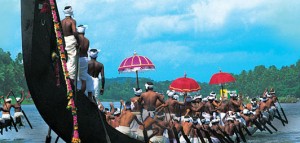
Aranmula Vallamkali – The Snake Boat Race Festival in Kerala

Aranmula Vallamkali also known as Aranmula Uthrittathi Boat Race, it is the annual snake boat water sports festival celebrated inAranmula village situated on the banks of Pamba River, in Pathanamthitta District, Kerala in the month of September during Onam festival. Vallamkali refers to boat race competition held during the last two days of the festival.

Snake Boat Race in Kerala - Photo courtesy Kerala Tourism

In this competition the participants, are trained to row these boats, they compete not merely for winning the competition but to celebrate the anniversary of the Shri Krishna idol installation , who is the main deity at the Aranmula  Parthasarathy Temple .

This annual festival attracts tourists from all over the world.  Here you will find snake boats in this colorful carnival called Palliyodams.  The structure of the boats resembles snakes that are 100 feet in length with its front tapering and the rear portion towering to a height of about 20 ft.  During this race 39 to 41 of such boats participate that can easily accommodate 120 people including oarsmen, singers and helmsmen.

Apart from this the famous boat race, other rituals including offering prayers to Lord Krishna early in the morning on the day of the boat race.  At this tome all boats assemble near the temple to seek blessing of Lord.  After the Morning prayers other rituals, the race starts from the afternoon, with groups of men and singers all shouting and singing in a rhythmic manner.

Tourist attractions in Aranmula :

  • Aranmula Kannadi – Aranmula is famous for Aranmula Mirror or Aranmula Kannadi – the world only hand-made mirrors made entirely from metals, without using glass.
  • Aranmula Parthasarathy Temple – Sree Parthasarathi Temple at Aranmula is place where Lord Krishna Temples in Kerala.
  • Chengannur Mahadeva Temple – Chengannur Mahadevar Kshetram is one of the oldest Lord Shiva Temples in Kerala.
  • Other religious attraction Ambalappuzha Sri Krishna Temple, Guruvayoor Temple, Thiruvarppu Krishna Temple and Trichambaram Sree Krishna Temple.

In 2011 this festival will celebrated on the end of Onam festival. Toshali Travel and Tours  offers budget festival Holiday packages and arranges, to be at nature “Gods own Country”. And customized your accommodation on demand. Toshali Travel and Tours is authorised Travel and Tour Operator, recognised and accredited by Ministry of Tourism, Government of India

To know more on the Kerala Tourism – Aranmula Vallamkali – The Snake Boat Race Festival in Kerala , post you comments or Contact our Toshali Holiday Planner at metu@toshali.in

Anant Chaturdashi : The last day of the Hindu festival of Ganeshotsav

Anant Chaturthi also known as Anant Chaturdashi is the last day of the Ganesh festival” celebrated in states like Maharashtra, Karnataka, Gujarat and Andra Pradesh. This day follows the immersion of the idols of the beloved lord.

Anant Chaturdashi Festival

On the day of Anant Chaturdashi, the idols of Lord Ganesha installed at home and various “Mandapas” (display place) are taken to a pond, lake, river or a sea in great procession with slogan: “Ganpati Bappa Morya, Agle Baras to jaldi aa” (“Father Ganpati, come again next year”). On this day, people travel to the water front with the idols, big and small, dancing and singing in large procession. The 10 day long festival comes to an end after the immersion ceremony is over.

During ceremony, Vedic hymns from the Rig Veda and Ganapati Atharva Shirsha Upanishad and Ganesha Stotra from the Narada Purnana are chanted. The whole community comes to worship Ganesha in beautifully done tents.

On Anant Chaturdasi, Lord Ananta Padmanabha is worshipped and Ananta Vrat is observed. The Vrat is an observance is followed for 14 consecutive years for marital bliss, happiness and prosperity. This vow is observed by married couple. By performing Anant Chaturdasi puja, it is believed that a person is relieved of all sins committed during his lifetime.

Anant Chaturdashi in 2011 is on Thursday, the 1st of September. Toshali Resorts, welcomes all to be the part of “Anant Chaturthi” Festival experiencing – exclusive arrangement is been done every year for the guest to witness and be the part of the festival. For Hoilday Package Reservation write to metu@toshali.in

If you feel, we have missed any information that is helpful for your friends visiting this blog, do post. We would be glad to receive your comments and conversation.. We are looking for photos of “Anant Chaturthi” Festival, please fell free to post.

Green Delhi… Breath life to the place we stay!

Delhi is synonymous with wide roads and lush greenery. Reportedly Emperor Akbar ordered all roads to be lined with ‘Sheesham’ trees. The Imperial Capital Committee, decided to plant mainly evergreen trees in its new capital.

Delhi has some 42 types of ‘native’ trees. The commonest tree is the Mesquite (Prosopis Juliflora), called ‘Vilaiti or Angrezi Keekar’. It was introduced around 1915 from the Central Americas.

Emperor Shah Jahan offered special rent-free tenures to proprietors around Sadhaura Kalan, northwest of Mori Gate.

Today Jamun trees are found on Rajpath, India Gate and some Luyten’s avenues. Delhi’s numerous gardens, like the Mughal Gardens, Lodhi Gardens, Zoological Park, Buddha Jayanti Park, Delhi Golf Club, Nehru Park, etc boast of over 250 species of trees.

Population pressure has seen depletion in the green cover. Government initiatives including Bhagidari scheme and a revamped industrial policy countered the situation. The strategy was to:

•       Motivate citizens to generate minimum waste
•       Recycle horticulture waste.
•       Minimising use of polythene bags.
•       Panting trees.
•       Celebrating festivals in an eco friendly manner.
•       Educating citizens about re-use and recycling.

The situation has improved 2005 onwards.

According to the State of the Forest survey 2009 Delhi (8.29%) comes third behind Lakshwadeep (12.50%) and Chandigarh (9.65%) in the percentage of area under forest cover.

Delhi has a geographical area 1,483.01 sq km. Of this 123 sq km is under tree cover. Delhi’s tree cover has increased to 176.58 sq km till 2005. It rose by 16 sq km from 107 sq km to 123 sq km during the 2007-2009 periods mainly due to the government’s plantation drive.

The forest cover comprises 6.76 sq km very dense forest, 49.84 sq km moderately dense forest, and 119.98 sq km open forest.

New Delhi district is the greenest having the highest forest cover at 46.60 % of geographical area, followed by South Delhi (31.46 %) and South-West Delhi (10.08 %).

Asola-Bhatti is the only forest sanctuary in the capital spread over 1,991 hectares.

Greatest threats to the green cover are:

•       Delhi ridge has seen shrinking in size due to mining and quarrying activities, especially in the south-central Ridge.

•       At 1,615 units, Delhi has the highest per capita consumption of electricity in the country.

•       Apart from the production levels of 785 MGD in 2009, the average shortfall in water is about 200 MGD (million gallons per day) but the percentage of unaccounted for water is 35-40 per cent, reflecting problems in management of resources.

•       As against 8 private cars per 1,000 persons across India, Delhi has 85 even as the city has seen an exponential growth in the number of vehicles from 30.5 lakh in 1998-99 to 63.0 lakh in 2008-09.

Delhi introduces itself through nature and heritage walks along its lush greenery dotted with heritage sites and place of Delhi delicacies. Toshali Holidays arranges, to be with the nature “Walks in Green Delhi”. And customized your accommodation on demand. These walks reveal a side of the mega polis little known – a human side, a human face that needs all nurturing and care that we can afford – to preserve it for posterity.

To know more on the Toshali Holidays “Walks in Green Delhi”, post you comments or Contact our Delhi City Tour Planner at metu@toshali.in

Dev Deepavali : Light Festival of Gods in Varanasi, India

Dev Deepavali is celebrated on the fifteenth day of Diwali. It is a tribute to river Ganga at Varanasi. It is held on Kartik Poornima. The month of Kartik (October – November) has celestial significance. The Ghats of Varanasi sparkle with earthen lamps, lighted amidst chanting of Vedic hymns. Belief is that on the day of Dev Deepavali, Gods come down to bathe in the Ganges. This festival coincides with the Jain festival and Guru Nanak Jayanti.

The Uttar Pradesh Tourism department organizes Ganga Mahotsav around this period. Devotees start assembling from the day of the Prabodhini Ekadasi. Celebration is usually held on the Dasaswamedh Ghat. Reputed artists perform to lend a creative touch to the festivities.

The ‘Ganga-Aarti’ is an important event in the evening. Almost all Ghats organize their own ceremony. Huge lamps are set ablaze and the priest holds forth the lamp as the multitude chants the hymns. As evening sets in the magical reflection of the thousands of flickering lamps lends a heavenly touch to the ancient city.

Dev Deepavali Festival Celebration is on November 21’2010

Toshali Travel and Tours  offers budget festival holiday packages and arranges, to be at “Dev Deepavali Festival” at Varanasi, Uttar Pradesh. And customized your accommodation on demand, book your package reservation at with Toshali Travel and Tours. Toshali  is authorised Travel and Tour Operator, recognised and accredited by Ministry of Tourism, Government of India

To know more on the Dev Deepavali Festival, post you comments or Contact our Toshali Holidays Planner at metu@toshali.in

Karva Chauth Festival : Married women seeking long life of their husbands and marital bliss

Karva Chauth sees married women fast from sunrise to moonrise for the safety and long life of their husbands. The fast is observed on the fourth day after the full moon, in the month of Kartik.

Karva means diya and chauth means ‘fourth’ in Hindi. Women prepare by buying cosmetics, jewelry and puja items. They fast through the day. In the evening, a women-only ceremony is held. Women dress in fineries sit in a circle with their puja thalis. The story of Karva Chauth is narrated and the song is sung around an idol of Gaur Mata or Parvati.

Once the moon is visible, the fasting woman view its reflection in a vessel filled with water, through a sieve, or cloth. Water is offered to the moon for its blessings. She then views her husband’s face in the same manner.

On this occasion of Vrat (Fast) a Kalash (small container) is filled with either milk or water. In that Kalash Pancha Ratna (Five different pieces of  different metals (gold, silver, copper, brass and iron) then this kalash is  presented to  Brahmin and also it was exchanged with other married women. After it women offer prayers to Shree Lord Ganesh : “Let the offerings of this Karva  bring life to my husband and may my Saubhagaya be everlasting “and express such desire that ‘May my death precede that of my husband so that I can enter the chitaa (funeral pyre) as a bride (not as a widow).

According to legends this narrative was took place between Shiva and Parvati. Shiva told its significance.

Queen Veervati was misled into breaking her fast and the king, died. The Goddess instructed her to repeat the Karva Chauth fast and Lord Yama was forced to restored the King’s life. In another variant of the Goddess Parvati gave back the life of the King.

In Mahabharata, i.e Dwapar Yuga, Draupadi is said to have observed this fast on the advice of Lord Krishna.  In another legend there was a woman named Karva, who was deeply devoted to her husband. While bathing at a river, her husband was caught by a crocodile. On Karva’s prayer Yama revived and blessed them with long life.

In 2010 this festival falls on 26 Oct, Tuesday. Toshali Holidays welcomes all to be the part of Karva Chauth Festival experiencing, exclusive arrangement has been done for the guest to witness and be the part of the festival. Book your package at  http://bit.ly/d6Ap07 . For more details on customized festival package contact travel planner to metu@toshali.in

If you feel, we have missed any information that is helpful for your friends visiting this blog, do post. We would be glad to receive your comments and conversation.

The Taste of Delhi: A Unique Food Culture

Delhi, is an epicureans’ paradise. The diverse range of cuisines makes Delhi a gourmet’s delight. Delhi offers a mixture of North Indian,  Mughlai, Punjabi cuisine and mouth watering street fare. Where else would you find a street named after flatbreads? Parathewali Gali. By the way if you are down there try the Papad Paratha.

Food of Delhi (Photo courtesy Delhi Tourism)

Street food is the mark of any city – Sitaram Diwanchand’s chole Bhatures, Kuremal’s Kulfis since 1908, Moth Kachori of Multani Dhanda, Jain Sa’ab’s kachoris, Pakorimal Doodhwala’s Milk and Lassi, Bade Mian’s Kheer, Kinari Bazar’s Khurchan, Kulle chaat of Chawri Bazaar, Daulat Ki Chaat, Japani Samosa, Fruit Sandwiches at Jain Coffee House, Giani’s Faluda, Keema Samosa, Sutli Kababs etc. Ghantewala’s Sohan Halwa has been tickling taste buds since 1709. The royal elephant reportedly refused to budge without his daily dose of Ghantewala’s sweets and he used to shake his head to ring the bell tied to his neck to demand sweets. So the halwai got the name Ghantewala.

The place to seek variety in Mughlai food is in the Old city area – Karim’s and Al Jawahar are famous but many an unsung Kababchi or Biryani Wala will surprise you.

Delhi has a big migrant population from all over India. Earlier eateries at state houses served their regional delicacies. Sarvana Bhavan is particularly well known for Andhra cuisine. In CR Park at South Delhi area cuisine from Bengal dominates with cutlets, rolls and sweets having a field day with the varieties of fish on offer. In fact all the state houses have eateries – little known but tasty fare. Regional cuisine is finding its foothold slowly – in restaurants like Brown Sahib and the Gunpowder.

If you are willing to seek out, Delhi has a lot to offer on the culinary trail. For example the Afghani food joint in Lajpat Nagar or the Russian place – Bline, Korean food at Sun and Moon or the Gung in Green park, or excellent Continental fare in the Metropolis restaurant.

Chandni Chowk is a different dimension all together. “No ads, no frills, great food – great prices” says the nameless milk cake shop of Kucha Ghasi Ram. Kashmiri Kebabchi opposite to the Shan Masjid and Bade Mian’s are famous and  few gems in this treasure chest of good food.

Commenting on delicious dishes like Biryani is a bit difficult. It is a touchy subject and diehard Lucknavis will pay little heed to Dilli’s fare and Hyderabad is and Kolkattans will swear by their fare but a trip at Hazi Noor Mohammed near Turkman gate or Babbu Bhai near Matka Pir might convert a few. Similarly Lucknow’s ‘Kakori Kebabs’ has a competitor in Dilli’s Gola Kabab of Mian Sahib near Jama Masjid.

Another, landmark “Delhi Haat” Near INA Market and Netaji Subhas Place, showcases India’s rich handicrafts and regional food heritage from all the Indian states. It’s a must visit for handicraft and culinary buffs.

Writing about a diverse and well researched subject like Delhi’s food at best is a difficult task. Eminent food critics have dedicated entire blogs on the subject but only few desperate writers would be able  to condense Saadi Dilli’s food in such a short span. It is only my fascination for food and lack of a meaningful ‘Adda’ that I am accustomed to have made a lazy fellow like me to amble across to some of these heavenly eating joints. The experience of describing a Gola Kabab dissolve in your mouth would strain my modest vocabulary and perhaps offend the non carnivorous type. But I would like to hear it from you – your experience, be it an obscure Kachori Wala or a Kulfi Wala – you know the place to tell me all about it – so I might log some more food travel miles.

What are you thinking…. simply post your comment, if you feel we have left any food of your choice and any food courts in Delhi. Lets us know your Food experience, while you are in Delhi. For Delhi Darshan and day tour, please leave a message at metu@toshali.in

Share this with your friends, colleagues, relatives travelling to India and you want to taken out for best cuisines in Delhi.

Delhi World Heritage Sites: A New Delhi City Tour

Delhi is a rough triangle formed by the Aravallis in the west and river Yamuna in the east. Settlements dating back to Stone Age has been uncovered. Its magnificent monuments span a period of almost a thousand years. Different dynasties built their capitals here.  Archaeological evidence points to between 8 to 12 sites in and around Delhi, where a new city was built. Some of them are Lal Kot and Quila Rai Pithora in the early medieval period; Tughlaqabad and Kotla by the Sultanate rulers, the Mughal capital of Shahjahanabad and New Delhi, by the British. Many heritage historians have mentioned that Delhi was also the site of the capital of the Pandavas of Mahabharata – Indraprastha. Folklore goes that the present Purana Quila or Old fort of Delhi stands over the site that was once Indraprastha.

The Tughlakabad fort built by Ghyasuddin Tughlak was once an imposing structure. The last ruler of the Tughlak dynasty Feroze Shah ruled for 37 years. He built a fort Ferozeshah Kotla, a fort which has no remnants today. The Ferozeshah Kotla – scene of many major cricketing duels stadium stands today on the erstwhile site of the fort. Feroze Shah is also credited with building the top two floors of the Qutab Minar when lightning destroyed in 1368. There are three World Heritage Sites in Delhi.

•       Red Fort: Built by Shah Jahan, between 1638 and 1648. It houses the Diwan-i-Khas and the Diwan-i-Am, the Rang Mahal, Moti Masjid etc.

•       Humayun’s Tomb: Built in 1570 AD by Humayun’s wife Haji Begum. It is a standout example of Mughal architecture.

•       Jama Masjid: Constructed in 1656 AD under the guidance of the Prime Minster of Shah Jahan, Saadullah Khan.

Besides these, the Qutub Minar and Quwwat-al-Islam (Might of Islam), the earliest extant mosque in India graces Delhi. The Jantar Mantar – an astronomical observatory was built by Maharaja Sawai Jai Singh II of Jaipur in the year 1724. Safdarjung’s tomb and Madrasa enrich Delhi’s heritage.

There are many hidden gems of historic monuments here. The Khirki Masjid (Mosque) in Saket is a small but uniquely designed mosque. The Dargah of Sufi saint Qutubddin Bakhtiyar Kaki near the Qutab and ‘Agrasen ki  Baoli’ in the middle of Connaught Place.

The capital is one of the greenest capitals and the gardens here reflect the eclectic taste of its erstwhile rulers. “Mughal Gardens” inside the President’s estate is one of the best laid out, the beautifully landscaped “Lodi Gardens” encloses the tombs of an imperial dynasty. The Old city has “Begam Ka Bagh” – appointed by the eldest daughter of emperor Shah Jahan – Jahan Ara – the last remnants of it are now parts of the Gandhi park near Chandhi Chowk, “Roshnara Gardens” was laid out by Jahanara’s younger sister Roshnara in 1650 – the garden would be later infamous for her amorous exploits and would bear the pathos of her slow, painful death by poisoning in 1671. “Shalimar Bagh” was appointed by Akbarbadi Begum – the favourite wife of Shah Jahan after Mumtaz Mahal. “Qudsia Garden” was named after begum Qudsia and Tees Hazari was named after the number of trees in the garden appointed by the builder emperor Shah Jahan.

Each place has its unique historic significance – “Gurdwara Sheesh Ganj” remembers a martyred Sikh Guru while “Khooni Darwaza” is where Bahadur Shah’s sons were executed.

Every nook and corner of the old city has a tale to tell. In the walled city the “Neharwali Haveli” at Darya Ganj is where Gen. Parvez Musharraf  was born, the “Churiwali Haveli” of Begum Samroo (Begum Sombre actually) who rose from a courtesan to a Zamindar, or around the corner in Ballimaran, the haveli which saw the last days of the unparalled Urdu poet  Mirza Ghalib.

Cutting to modern times the India Gate, Lotus temple, Akshardham stand out as landmarks.

Toshali Resorts, welcomes all to be the part Delhi Darshan, site seeing experiencing, exclusive arrangement has been done for the guest to witness and be the part of the festival. For holiday as well as “Delhi Darshan”  Tour Package Reservation write to metu@toshali.in

If you feel, we have missed any information that is helpful for your friends visiting this blog, do post. We would be glad to receive your comments and conversation.

Aanvla Navmi: Festival of India celebrated by Women for Success and Family Welfare

The Festival of Aanvla Navmi is very significant festival of women. On this day women perform special Puja and pray before Indian Goose Berry for the success and welfare of their family on the day of Aanvla Navmi.  If women are not able to find Goose tree in close vicinity of the house then a small branch of the tree can be brought to the house for performing puja.

Requirements for the Aanvla Navmi festival:

  • Indian Goose Berry Tree or Aanvla (Amla) tree or branch of the tree.
  • Water in a kalash
  • Milk
  • Roll, moli, chawal, jaggery, batasha
  • Raw white thread, moli
  • Doop, deepak, matchstick
  • Money for offering
  • Saree, blouse—piece and dakshina for Brahminis (optional)
  • Blouse piece (either red, yellow or pink in color)

On the day of the Puja, women rise up early in the morning and then take a bath and wear new or washed clothes. This puja is performed in a particular direction. There is custom to do Puja while facing towards east direction. First, water is offered to the tree followed by Jaggery, Chawal, Batasha, Aanvala, Moli, Roli, Milk, blouse and some money is brought. All Ladies put tilak on their forehead. There is special trend of Parikrama is practiced in which women revolve around the tree for eight or 108 times while moving they wrap the raw white thread or red moli around the Aanvla tree.

After performing Parikrama.  All women sit together and read or listens Katha associated with Aanvla Navami. Dhup (Lamp) are lit before the tree then all ladies put tilak (Auspicious red color Mark by roli) on their forehead.

The special trend of Parikrama is practiced in which women revolve around the tree for 8 or 108 times and while moving they wrap the raw white thread or red moli (Red sacred thread) around the Aanvla tree.

After performing Parikrama, all women sit together and read or listens Katha associated with Aanvla Navmi. Katha of Bindaayakji is read after the katha of Aanvla Navmi. There is also the practice of keeping few grains in the hand during katha and later placed in Kalash filled with water placed near Aanvla tree.

There is also tradition of inviting the Brahmini for food and presenting clothes and money.

In 2010, “Aanvla Navmi” is celebrated on 15th November. Toshali Resorts, welcomes all to be the part of Aanvla Navmi Festival experiencing, exclusive arrangement has been done for the guest to witness and be the part of the festival. For Hoilday Package Reservation write to metu@toshali.in

If you feel, we have missed any information that is helpful for your friends visiting this blog, do post. We would be glad to receive your comments and conversation.. We are looking for photos of Aanvla Navmi Festival, please fell free to post.

Gandhi Jayanti : The National Festival Celebration in India

Mahatma Gandhi in Orissa… A tribute..


“Raghupati Raghav Raja Ram, patit pavan Sita Ram Sita Ram Sita Ram,

Bhaj pyare tu Sitaram Ishwar Allah tero naam, Saab ko Sanmti de Bhagavan”

~ Mahatma Gandhi ~ ‘Bapu’

It means.. Lord Rama, Chief of the house of Raghu, Uplifters of those who have fallen, (O divine couple) Sita and Rama, Beloved, praise Sita and Rama God or Allah is your name, Lord, bless everyone with wisdom. Before he became Mahatma, Mohandas Karamchand Gandhi, travelled throughout India to understand the people of this country. On Gandhi Jayanti on October 2 we honour the memory of this ‘Mahatma’. There is a temple in Bhatra village, in Sambalpur. Mahatma Gandhi is worshipped there. The priest is a Dalit. The temple was the brain-child of ex MLA Abhimanyu Kumar. When he became MLA in 1971, the idea of a temple dedicated to the man who abolished untouchability inspired him. Between 1921 and 1946, Gandhiji visited Orissa eight times. The response was spontaneous and overwhelming. He along with Kasturba Gandhi arrived in Cuttack on Dola Purnima (Holi) March 23, 1921 and addressed three meeting – at Kadam-i-Rasool, at Binod Bihari and a mammoth meeting on the riverbed of the Kathjodi.

He travelled to Bhadrak, Sakshigopal and Puri. Accompanied by Gopabandhu, he left for Berhampur on March 29, 1921. Gandhi’s second visit to Orissa was on the request of Madhusudan Das on August 19, 1925. Gandhi would influence people like Utkalmani Gopabandhu Das and Madhusudan Das greatly. His fortnight long tour of Orissa for the propagation of khadi started on December 4, 1927. He had high blood pressure and he rested in the house of Madhusudan Das. He left Cuttack on December 21 to attend the Congress session at Madras. In 1934, Gandhiji began his celebrated “Padayatra” with the mission of harijan upliftment and abolition of untouchability. He visited Orissa twice in this connection. During his visit of March 25, 1938, Kasturba, Durgaben, Sardar Patel, Maulana Azad, Rajendra Prasad, Acharya Kripalini, Mahadev Desai accompanied him. They addressed the annual conference of Gandhi Seva Sangha and the Utkal Khadi and Village Industry exhibition at Berboi, near Delang in Puri. On January 20, 1946, Gandhiji passed through Orissa on his way from Calcutta to Madras. He addressed the assembled crowds at Cuttack and Berhampur. This was his last visit to Orissa.

Gandhiji was moved to tears when the famine-stricken people of Puri contributed a paise or an anna for the Tilak Swaraj Fund. Gandhiji said, “The famine-stricken skeletons of men and women in Orissa haunt me in my waking hours and in my dreams. Whatever can be useful to those starving millions is beautiful to my mind. Let us give today first the vital things of life and all the graces and ornaments of life will follow”. In a fitting coincidence the Mahatma’s ashes were preserved in Orissa for long. An urn with his ashes was kept in the Puri Raj Bhavan from February 12, 1948 to June 27, 1948. Then the urn was preserved in Cuttack, at the Imperial Bank of India – later the State Bank of India till his great grandson, Tushar Gandhi, immersed them in the Ganges at Allahabad in 1997 – on the Mahatma’s 49th death anniversary. Gandhiji is Mahatma because he taught the country pride; his ideals stand out in a world torn by strife. He was not god, neither had he claimed such. He practiced what he preached and ended the journey as the Mahatma – a long way from a young lawyer treated inhumanly in foreign soil. With his life he taught us that to be superman you need have only humanity and humility. Does not some scripture say – “the meek shall inherit the earth”. His life shall be a lesson for all for ages to come and India shall be proud of the Mahatma who imbued the ideal of oneness in multiplicity.

To Commerate and Celebrate Gandhi Jayanti on 2nd October’2010 (Saturday) – the Birth anniversary of Mahatma Gandhi. Toshali Resorts invites you to Gandhi Jayanti, the National holiday Weekend Getaway at Toshali Sands, Puri India. For Reservation click on http://bit.ly/9R2Sda . You can also contact your travel consultant metu@toshali.in to plan you weekend getaway vacation. If you feel, we have missed out on any information, do post in your comments, and we would be glad, if you can share this blog with you friends at Facebook, Twitter, Google Buzz, Myspace, and other Social Networking Sites.