Amongmong Festival : Pre Harvest Festival of Sangtam Tribe in Nagaland

Amongmong  festival is observed in the first week of September by the Sangtam tribe in Nagaland. It is a pre harvest festival. Amongmong means togetherness.

Six days of Amongmong has its unique importance. People worship resident deities and the three cooking stones in the fireplace to get good health, harvest and prosperity.

The village priest, at the death of night announces “ZANGNYOU MONGMONG NUNG EH-LEHE”. The next morning another priest will read theproclamation. The villagers being preparation for the festival byaccumulating food stuff, firewood and special wine like ROHI and MADHU. The announcement denote the separation of the spirit of the dead from the living. Throughout the festival, a line is drawn between the dead and the living.

AMONGMONG signifies ‘togetherness forever’. The object is to have a good harvest. The figure “6” bear great significance among Sangtam tribe. For example, when a head hunter brings an enemy’s head he is undefiled and observe penance for 6 days. A male baby is christened onthe 6th day.  A deceased’s family would mourn for 6 days.

Each day of the festival has got its own significance. The first day is called “SINGKITHSA”. This day is marked by the closing of all transaction relating to purchase of domestic animals like pigs, cow, Mithuns and roping them. Preparing and collecting of food stuff and harvesting vegetables and millets.  On the second day, the roped domestic animals are killed. After setting aside some portion for the feast, the meat is distributed among the team members of the group called “ATHIRÜ” and “AKHINGRÜ”. The third day is “MÜSÜYANGTAP” – day of worshipping the three oven stones. The oldest woman of the household performs the ritual by placing gum rice balls on the top of the stones and pouring little wine on these stones. The god (LIJABA) is represented by these stone.

On these three days villagers will neither go to fields nor outside the village as this is believed to bring calamities. At dawn, the priest would go to the village well and draw water carefully. Others would follow. Each one of them must cover their head with green leaves, lest they are stricken with cholera. The whole day is devoted to drinking of rice beers, dancing, tug of war and other merrymaking.

Day four is KIKHA-LANGPI. Males would clear the village. Paths, wells and springs are cleaned. On returning every grown-up male will contribute meat and wine and feast together in the house of the village priest. The wives puts chilies, ginger and cotton in green leaves called “TSIDONG” and put them in the field or outside the village to ward off calamities and prevent damage to crops.

Day five is “SHILANG WUBA NYUNONG”. Villager visit to relatives,  friends and neighboring villages, sharing meal, drinks and exchange of meat as gift. The last day of the festival is called “AKATISINGKITHSA”. Harvesting starts from this day….

Toshali Travel and Tours  offers budget festival Holiday packages and arranges, to be at Nagaland Amongmong festival ”. And customized your accommodation on demand, do visit at http://bit.ly/beEU3x . Toshali Travel and Tours is authorised Travel and Tour Operator, recognised and accredited by Ministry of Tourism, Government of India

To know more on the Amongmong Festival, post you comments or Contact our Toshali Holiday Planner at metu@toshali.in
Tirupati Tirumala Brahmotsavam : Amazing temple festival of Lord Venkateswara

Brahmotsavam is a celebration of nine days at the temple of Lord Sri Venkateswara at Tirupati. This temple is cleaned according to the guideline given in the religious texts.  It is decorated with flowers and mango leaves.

The significance of each day ritual and holy celebration are … :

Day1: Pedda Seshavahana:

The first day of Brahmotsavam is commenced with the hosting of Garuda Dhwaja(A religious flag, with the sign of Eagle on it), It is followed by a  panoramic procession of Lord Venkateswara around the temple. This event starts at 10pm and continues till midnight. The vehicle on which the Lord Venkateswara is carried is called Pedda Seshavahana and is believed to be the manifestation of Adisesha (The thousand-headed serpent, on whom Lord Sri Maha Vishnu rests in his abode). The magnanimous march lasts for the first two day of Brahmotsavam.

Day 2: Chinna Seshavahana

The second day starts with the Lord’s procession, this time on Chinna Seshavahana. Whole day deities are worshipped and in the night they are taken to the Uyala Mandapam for the Unjal Seva. The day slips away in the worship of the Lord and in the night the deities are taken to the Uyala Mandapam for the Unjal Seva (swinging). This is followed by procession on a Hamsavahana through the temple streets. It is believed that Hamasavahana signifies purity, and the Hamsa (swan) on it is known to for it is ability to differentiate between good and bad, and said to denote peace.

Day 3: Simhavahana

Simhavahana performed on third day. On this day deities are carried on Simhavahana- a vehicle with lion’s emblem on it that denotes command and authority. It is considered that Lord assumes the form of Narasimaha (a mythological character who was half human and half lion) to kill the demon named Hiranyakasipu.  After the procession the deities are once again taken to the Unjal Seva followed by an exciting ride on Mutayalapandri Vahana; the symbol of purity.

Day 4: Kalpavriksha Vahana

The fourth day comprises of two processions, one on the Kalpavriksha Vahana in the morning followed by a procession on Sarvabhoopala Vahana in the night. According to legend, Kalpavriksham is name of a tree that grants boon

Day 5: Garuda Vahana or Mohini Avatarotsavam

Garuda Vahana or Mohini Avatarotsavam is celebrated on the fifth day to commemorate the lord’s incarnation as Mohini to assist the Devtas during Ksheerasagarmadhanam.

In the Vaishnava Puranas, Garuda is also called periyatiruvadi, meaning the first devotee. Therefore, Lord Venkateswara selected Garuda as his vehicle for the most important day of the Brahmotsavam.

Day 6: Gaja Vahana

On sixth day,  Gaja Vahana is celebrated, it is believed that in the night Lord mounted on the Gaja Vahana(elephant).

Day 7: Suryaprabha Vahana

On the seventh day of Brahmotsavam, Lord rides on Suryaprabha Vahana. According to Hindu Mythlogy Lord Vishnu is believed to be the center of the universe. To symbolize this, Lord Venkateswara uses the Suryaprabha(light of the Sun).

Day 8: Rathotsavam

The Lord is taken on a procession seated on a chariot known as Rathotsavam on the eighth day of Brahmotsavam. The idols of Lord Sri Krishna and the four horses are placed before the decorated idols of the Lord and his consorts.

Day 9: Chakrasnana Mahotsavam

On the last day, Pallaki Seva and Chakrasnana Mahotsavam in the morning and Dhwajavarohanam are performed in the evening. The processional images are anointed with turmeric powder, oil and other auspicious ingredients and Abhishekam is performed. Sudarsan Chakram is given a bath in the Swami Pushkarini. The Garuda flag is then lowered.

This year Tirumala Brahmotsavam festival is celebrated on 9th to 18th October 2010 at Tirupati. Lakhs  of tourist and pilgrims pay holy visit at Tirupati Tirumala Brahmotsavam Festival every year. May Lord Venkateswara call you to make the holy pilgrim this year.

Toshali Travel and Tours offers budget festival Holiday packages and arranges exclusive accommodation for Tirumala Brahmotsavam Festival at Tripati on demand, click on http://bit.ly/bRcZKo . Toshali Travel and Tours is authorised Travel and Tour Operator, recognized and accredited by Ministry of Tourism, Government of India

To know more on the Tirumala Brahmotsavam Festival at Tripati pilgrim package, post you comments or Contact our Toshali Holiday Planner at metu@toshali.in

Do post your comment and suggestions, if you feel we have left out any information that would be helpful for your friends, family members. Also share this blog with Facebook, Twitter, Orkut and other Social Networking sites….

Bhai Dooj Festival : Hindu Ritual for Sister & Brother

Bhai Dooj. is one of the major festivals of India, it is also spelt as Bhaidooj, Bhaiduj or Bhai Duj. ‘Bhai’ means brother and ‘Dooj’ means two days after new moon, this festival is celebrated between brothers and sisters other than Raksha Bandhan to strengthen the bond of their love. On this auspicious day, sisters put Tilak on their brother’s forehead and pray for their long life.  In return, brother promises their sisters to stand by their side in all hardships of life. This is the most awaited festivals in India. Every year this festival comes two days after Diwali in Karthik month.

According to the custom and rituals sister applying tika on the forehead of the sister, giving him eatables and in return receive gifted, the women and children sit around and hear the story.

India is a country of varied cultures, customs and traditions. The festival of Bhaiya Dooj is known by various names in different regions and has its own regional name that signifies different ceremonial celebrated connotations.

  • Bhai Phota is celebrated in the state of West Bengal on the Dvitya i.e. on the second day after the Kali Puja
  • Bhai Tika / Bhai Teeka is celebrated in Nepal on the fifth and the final day of the popular Festival of Light called ‘Tihar’ or ‘Panchak Yama’  it is also known as ‘Bhai Tihar’ and it is a part of Tihar celebrations in the Himalaya Kingdom.
  • Bhathru Dwithiya is also known popular name for Bhai Dooj, it falls on the fifth and last day of Diwali festival. ‘Dwitheya Day’ meaning, second day after new moon. Sisters pray for their brothers long life.
  • Bhatri Ditya is just another name of the famous Hindu festival of Bhaiyya Dooj, This festival is celebrated to strengthen the beautiful bond shared between a brother and a sister, it is also considered a part of Diwali celebrations at many parts of India.
  • Bhai Bij, Bhaubeej or Bhav Bij amongst the Marathi speaking community in the states of Maharashtra and Goa. As like Bhaidooj festival celebrations in rest of India, Bhai Bij, Bhaubeej or Bhav Bij falls on the last day of five-day-long Diwali festival, here also in western India in Bhaubeej festival sisters pray for their brothers long and happy life as they perform tika ceremony.
  • Yamadwitheya is from the legend of god Yama Raja (the Hindu mythological god of Death)himself and it is one of the most commonly told story of Bhai Dooj. Here, the story told as after Yama Raaj long separation from his sister Yamuna or Yami. On the Dwitheya or the Dooj or the second day of the new moon When Yami met his brother Yama (also know as Dharam Raj) and welcomed whole heartedly, applied red tilak on his brother’s forehead and treated him a special meal. Yamaraj was overwhelmed receiving the warm welcome from his sister and he announced that whosoever receives a red tika from his sister on the day of ‘Dooj’ will not be hurled to hell.  Since that day Bhai Dooj is also known as Yamadwitheya.

In 2010, Bhai Dooj festival is celebrated on 7th November (Sunday)

Toshali Travel and Tours offers budget festival Holiday packages and arranges exclusive accommodation for Bhai Dooj festival on demand, click on http://bit.ly/aphUEF. Toshali Travel and Tours is authorised Travel and Tour Operator, recognized and accredited by Ministry of Tourism, Government of India

To know more on the Bhai Dooj festival, post you comments or Contact our Toshali Holiday Planner at metu@toshali.in Do post your comment and suggestions, if you feel we have left out any information that would be helpful for your friends, family members. Also share this blog with Facebook, Twitter, Orkut and other Social Networking sites….
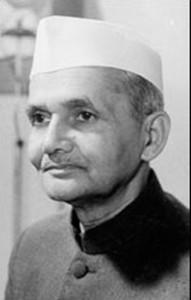
“Jai Jawan Jai Kisan” : A Tribute to ‘Bharat Ratna’ Shri Lal Bahadur Shastri

‘Bharat Ratna’ Lal Bahadur Shrivastava Shastri (2 October 1904 – 11 January 1966), he shares his birthday with the Mahatma on October 2. He was the second Prime Minister of the Republic of India and a significant figure in the Indian independence movement.

'Bharat Ratna' Lal Bahadur Shrivastava Shastri (2 October 1904 - 11 January 1966)

A staunch Gandhian he discontinued the use of his surmane as it indicated his caste. he was born in Mughalsarai and moving to Varanasi in persual of higher education. A 1915, speech of Gandhiji converted him into a lifelong Gandhian. He spend some 9 years in prison for participating in the freedom struggle. His values never ditched him. During one of his prison terms his daughter fell ill. He was released for 15 days from teh prison. She died and a stoic Shastri performed her funeral rites and returned to prison, before time. And when his son’s illness was not cured withing the stipulated parole time he returned to prison..

In prison he got acquinted  with the works of western philosophers, revolutionaries and social reformers and translated the autobiography of Marie Curie to Hindi.

After independence, he was appointed as Parliamentary Secretary in Uttar Pradesh. Then He became Minister of Police and Transport. He was the first to appoint women conductors and ordered that Police use jets of water instead of lathis to disperse unruly crowds.

In 1951, he became the General Secretary of the All-India Congress Committee and played an important role in the landslide successes of the Congress Party in the General Elections of 1952, 1957 and 1962.

In 1951, Nehru nominated him to the Rajya Sabha. He served as the Minister of Railways and Transport in the Central Cabinet from 1951 to 1956. In 1956, he offered his resignation after a railway accident at Mahbubnagar and three months later, he resigned accepting moral and constitutional responsibility for a railway accident at Ariyalur in Tamil Nadu that resulted in 144 deaths. His unprecedented gesture was greatly appreciated by the citizens.

In 1957 he was appointed as the Minister for Transport and Communications, and then as the Minister of Commerce and Industry. In 1961, he became Minister for Home. Chacha Nehru died in office on 27 May 1964. Then Congress Party President K. Kamaraj was instrumental in making and installing Shastri as Prime Minister on 9 June. He pushed through the Green Revolution which led to India becoming a food-surplus nation, although he did not live to see it.

During the 22-day war with Pakistan, Lal Bahadur Shastri created the slogan of “Jai Jawan Jai Kisan” (“Hail the soldier, Hail the farmer”). He was instrumental in promoting the White Revolution.

The problem for Shastri’s administration was Pakistan. Laying claim to half of the Kutch peninsula, Pakistan sent incursion forces in August 1965,  leading to the Indo-Pak war. The Indo-Pak war ended on 23 September 1965 with a United Nations-mandated ceasefire. After the declaration of ceasefire, Shastri and Pakistani President Muhammad Ayub Khan attended a summit in Tashkent (former USSR) organised by Kosygin. On 10 January 1966, Shastri and Khan signed the Tashkent Declaration. The next day Shastri died, supposedly of a heart attack at 1:32 AM, and now he rest at Vijay Ghat, Delhi

He was posthumously awarded the Bharat Ratna, and his memorial “Vijay Ghat” in Delhi will forever remind Indians and humanity how this unassuming man personified ‘where there is a will there is a way’. His life would be a lesson for generations to come.

History has not forgotten this giant…… Jai Hind !!

Toshali Resotrts Pay Tribute and Celebrates the 106th Birth anniversary of Shri Lal Bahadur Shastri on 2nd October’2010 (Saturday) and invites you for a Weekend Getaway at Toshali Sands, Puri India. For Reservation and travel booking contact your travel consultant metu@toshali.in

If you feel, we have missed out on any information, do post in your comments, and we would be glad, if you can share this blog with you friends at Facebook, Twitter, Google Buzz, Myspace, and other Social Networking Sites.

Bateshwar Fair : The Colourful Annual Cattle Festival

Bateshwar fair, popularly known as Bhateshwar Mela is a large fair held at Bateshwar, an important cultural and spiritual center situated 70km from Agra in Uttar Pradesh. Large number of devotes come here from far region to worship Bateshwar Mahadev (Lord Shiva) the presiding deity.

108 temples at Bateshwar - Photo courtesy travel247.tv

Here at Bhateswar, you will find temples dedicated to the gods and goddesses of the Hindu Pantheon. It is a place of great religious importance to the Hindus. The Most striking feature of Bateshwar is its towering cliffs of clay and its impressive row of 108 white temples strung along with the slow flowing Yamuna River.

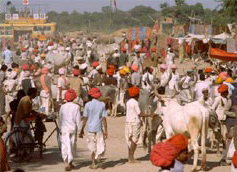
Every year the annual cattle fair is held at the banks of Yamuna River in the ‘Kartik’ month of Hindu calendar i.e in the month of November. The livestock fair has a very colorful ambience at Bhateshwar Mela. Thousands of cattle mainly Elephants, Camels Cows, Bullocks, Buffalos, Goats come here from different part of India assemble at this fair or mela adorned in beautiful rags and colors.

Annual Cattle Festival - Photo courtesy bharatonline.com

A wide variety of wild and domestic birds and pets are also available here for sale. Owners and buyers indulge in serious business combined with the gaiety of a market place. Various regional folk based cultural programs are organized here to entertain the tourist coming in from different countries of the world and states of India

In 2010,  Bateshwar Fair is celebrated on 12-26 November.

Toshali Travel and Tours offers budget festival Holiday packages and arranges to be at the Bateshwar Mela – the annual cattle festival And customized your accommodation on demand. Toshali Travel and Tours is authorised Travel and Tour Operator, recognized and accredited by Ministry of Tourism, Government of India

To know more on the Bateshwar Mela – the annual cattle festival, post you comments or Contact our Toshali Holiday Planner at metu@toshali.in
Ayudha Mela : The festival of triumph

Ayudha Puja is a local festival celebrated in the month of September/ October in Uttar Pradesh. Ayudha is the birth place of Lord Rama according to the Hindu Mythology so people worship Lord Rama on this day. Mythology also states that Ram was exiled by his father in the jungle and in the process he lost his birthright to be the King.

On this day people clean their instrument and then worship their instrument that they use for their earning. Worship of weapons and tools depict the respect towards the tools which helps in earning. Auto drivers clean and decorate their autos while shopkeepers do the same for their shops and worship Goddess Lakshmi. In modern time, people also worship their vehicles and cooking vessels on this day.

The principal goddesses worshiped during the Ayudha puja are Saraswathi(the Goddess of wisdom, arts and literature), Lakshmi (the goddess of wealth) and Parvathi (the divine mother), apart from various types of equipment. Many People mark this festival by visiting temple of Lord Rama and Sita, Pooja depicts the celebration of Victory of good over evil, which also has a vast social bearing on the people of Uttar Pradesh. Different regions follow different traditions for celebrating this festival. Ayudha Puja is the regional festival and celebrated in every nook and corner of Uttar Pradesh. On the ninth day of the Dasara festival, weapons and tools are worshiped. It is an integral part of the Dussehra festival celebration- festival of triumph.

In 2010, Ayudha Puja festival is celebrated on October 16.

Toshali Travel and Tours  offers budget festival Holiday packages and can customized your accommodation on demand. Toshali Travel and Tours is authorised Travel and Tour Operator, recognised and accredited by Ministry of Tourism, Government of India

To know more on the Uttar PradeshTourism – Ayudha Puja and Mela , post you comments or Contact our Toshali Holiday Planner at metu@toshali.in

Aranmula Vallamkali – The Snake Boat Race Festival in Kerala

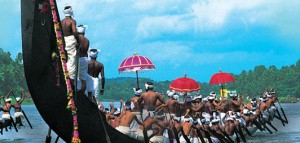
Aranmula Vallamkali also known as Aranmula Uthrittathi Boat Race, it is the annual snake boat water sports festival celebrated inAranmula village situated on the banks of Pamba River, in Pathanamthitta District, Kerala in the month of September during Onam festival. Vallamkali refers to boat race competition held during the last two days of the festival.

Snake Boat Race in Kerala - Photo courtesy Kerala Tourism

In this competition the participants, are trained to row these boats, they compete not merely for winning the competition but to celebrate the anniversary of the Shri Krishna idol installation , who is the main deity at the Aranmula  Parthasarathy Temple .

This annual festival attracts tourists from all over the world.  Here you will find snake boats in this colorful carnival called Palliyodams.  The structure of the boats resembles snakes that are 100 feet in length with its front tapering and the rear portion towering to a height of about 20 ft.  During this race 39 to 41 of such boats participate that can easily accommodate 120 people including oarsmen, singers and helmsmen.

Apart from this the famous boat race, other rituals including offering prayers to Lord Krishna early in the morning on the day of the boat race.  At this tome all boats assemble near the temple to seek blessing of Lord.  After the Morning prayers other rituals, the race starts from the afternoon, with groups of men and singers all shouting and singing in a rhythmic manner.

Tourist attractions in Aranmula :

  • Aranmula Kannadi – Aranmula is famous for Aranmula Mirror or Aranmula Kannadi – the world only hand-made mirrors made entirely from metals, without using glass.
  • Aranmula Parthasarathy Temple – Sree Parthasarathi Temple at Aranmula is place where Lord Krishna Temples in Kerala.
  • Chengannur Mahadeva Temple – Chengannur Mahadevar Kshetram is one of the oldest Lord Shiva Temples in Kerala.
  • Other religious attraction Ambalappuzha Sri Krishna Temple, Guruvayoor Temple, Thiruvarppu Krishna Temple and Trichambaram Sree Krishna Temple.

In 2011 this festival will celebrated on the end of Onam festival. Toshali Travel and Tours  offers budget festival Holiday packages and arranges, to be at nature “Gods own Country”. And customized your accommodation on demand. Toshali Travel and Tours is authorised Travel and Tour Operator, recognised and accredited by Ministry of Tourism, Government of India

To know more on the Kerala Tourism – Aranmula Vallamkali – The Snake Boat Race Festival in Kerala , post you comments or Contact our Toshali Holiday Planner at metu@toshali.in

Anant Chaturdashi : The last day of the Hindu festival of Ganeshotsav

Anant Chaturthi also known as Anant Chaturdashi is the last day of the Ganesh festival” celebrated in states like Maharashtra, Karnataka, Gujarat and Andra Pradesh. This day follows the immersion of the idols of the beloved lord.

Anant Chaturdashi Festival

On the day of Anant Chaturdashi, the idols of Lord Ganesha installed at home and various “Mandapas” (display place) are taken to a pond, lake, river or a sea in great procession with slogan: “Ganpati Bappa Morya, Agle Baras to jaldi aa” (“Father Ganpati, come again next year”). On this day, people travel to the water front with the idols, big and small, dancing and singing in large procession. The 10 day long festival comes to an end after the immersion ceremony is over.

During ceremony, Vedic hymns from the Rig Veda and Ganapati Atharva Shirsha Upanishad and Ganesha Stotra from the Narada Purnana are chanted. The whole community comes to worship Ganesha in beautifully done tents.

On Anant Chaturdasi, Lord Ananta Padmanabha is worshipped and Ananta Vrat is observed. The Vrat is an observance is followed for 14 consecutive years for marital bliss, happiness and prosperity. This vow is observed by married couple. By performing Anant Chaturdasi puja, it is believed that a person is relieved of all sins committed during his lifetime.

Anant Chaturdashi in 2011 is on Thursday, the 1st of September. Toshali Resorts, welcomes all to be the part of “Anant Chaturthi” Festival experiencing – exclusive arrangement is been done every year for the guest to witness and be the part of the festival. For Hoilday Package Reservation write to metu@toshali.in

If you feel, we have missed any information that is helpful for your friends visiting this blog, do post. We would be glad to receive your comments and conversation.. We are looking for photos of “Anant Chaturthi” Festival, please fell free to post.

Green Delhi… Breath life to the place we stay!

Delhi is synonymous with wide roads and lush greenery. Reportedly Emperor Akbar ordered all roads to be lined with ‘Sheesham’ trees. The Imperial Capital Committee, decided to plant mainly evergreen trees in its new capital.

Delhi has some 42 types of ‘native’ trees. The commonest tree is the Mesquite (Prosopis Juliflora), called ‘Vilaiti or Angrezi Keekar’. It was introduced around 1915 from the Central Americas.

Emperor Shah Jahan offered special rent-free tenures to proprietors around Sadhaura Kalan, northwest of Mori Gate.

Today Jamun trees are found on Rajpath, India Gate and some Luyten’s avenues. Delhi’s numerous gardens, like the Mughal Gardens, Lodhi Gardens, Zoological Park, Buddha Jayanti Park, Delhi Golf Club, Nehru Park, etc boast of over 250 species of trees.

Population pressure has seen depletion in the green cover. Government initiatives including Bhagidari scheme and a revamped industrial policy countered the situation. The strategy was to:

•       Motivate citizens to generate minimum waste
•       Recycle horticulture waste.
•       Minimising use of polythene bags.
•       Panting trees.
•       Celebrating festivals in an eco friendly manner.
•       Educating citizens about re-use and recycling.

The situation has improved 2005 onwards.

According to the State of the Forest survey 2009 Delhi (8.29%) comes third behind Lakshwadeep (12.50%) and Chandigarh (9.65%) in the percentage of area under forest cover.

Delhi has a geographical area 1,483.01 sq km. Of this 123 sq km is under tree cover. Delhi’s tree cover has increased to 176.58 sq km till 2005. It rose by 16 sq km from 107 sq km to 123 sq km during the 2007-2009 periods mainly due to the government’s plantation drive.

The forest cover comprises 6.76 sq km very dense forest, 49.84 sq km moderately dense forest, and 119.98 sq km open forest.

New Delhi district is the greenest having the highest forest cover at 46.60 % of geographical area, followed by South Delhi (31.46 %) and South-West Delhi (10.08 %).

Asola-Bhatti is the only forest sanctuary in the capital spread over 1,991 hectares.

Greatest threats to the green cover are:

•       Delhi ridge has seen shrinking in size due to mining and quarrying activities, especially in the south-central Ridge.

•       At 1,615 units, Delhi has the highest per capita consumption of electricity in the country.

•       Apart from the production levels of 785 MGD in 2009, the average shortfall in water is about 200 MGD (million gallons per day) but the percentage of unaccounted for water is 35-40 per cent, reflecting problems in management of resources.

•       As against 8 private cars per 1,000 persons across India, Delhi has 85 even as the city has seen an exponential growth in the number of vehicles from 30.5 lakh in 1998-99 to 63.0 lakh in 2008-09.

Delhi introduces itself through nature and heritage walks along its lush greenery dotted with heritage sites and place of Delhi delicacies. Toshali Holidays arranges, to be with the nature “Walks in Green Delhi”. And customized your accommodation on demand. These walks reveal a side of the mega polis little known – a human side, a human face that needs all nurturing and care that we can afford – to preserve it for posterity.

To know more on the Toshali Holidays “Walks in Green Delhi”, post you comments or Contact our Delhi City Tour Planner at metu@toshali.in

Dev Deepavali : Light Festival of Gods in Varanasi, India

Dev Deepavali is celebrated on the fifteenth day of Diwali. It is a tribute to river Ganga at Varanasi. It is held on Kartik Poornima. The month of Kartik (October – November) has celestial significance. The Ghats of Varanasi sparkle with earthen lamps, lighted amidst chanting of Vedic hymns. Belief is that on the day of Dev Deepavali, Gods come down to bathe in the Ganges. This festival coincides with the Jain festival and Guru Nanak Jayanti.

The Uttar Pradesh Tourism department organizes Ganga Mahotsav around this period. Devotees start assembling from the day of the Prabodhini Ekadasi. Celebration is usually held on the Dasaswamedh Ghat. Reputed artists perform to lend a creative touch to the festivities.

The ‘Ganga-Aarti’ is an important event in the evening. Almost all Ghats organize their own ceremony. Huge lamps are set ablaze and the priest holds forth the lamp as the multitude chants the hymns. As evening sets in the magical reflection of the thousands of flickering lamps lends a heavenly touch to the ancient city.

Dev Deepavali Festival Celebration is on November 21’2010

Toshali Travel and Tours  offers budget festival holiday packages and arranges, to be at “Dev Deepavali Festival” at Varanasi, Uttar Pradesh. And customized your accommodation on demand, book your package reservation at with Toshali Travel and Tours. Toshali  is authorised Travel and Tour Operator, recognised and accredited by Ministry of Tourism, Government of India

To know more on the Dev Deepavali Festival, post you comments or Contact our Toshali Holidays Planner at metu@toshali.in